Control rooms in business: why are they the future of large enterprises?


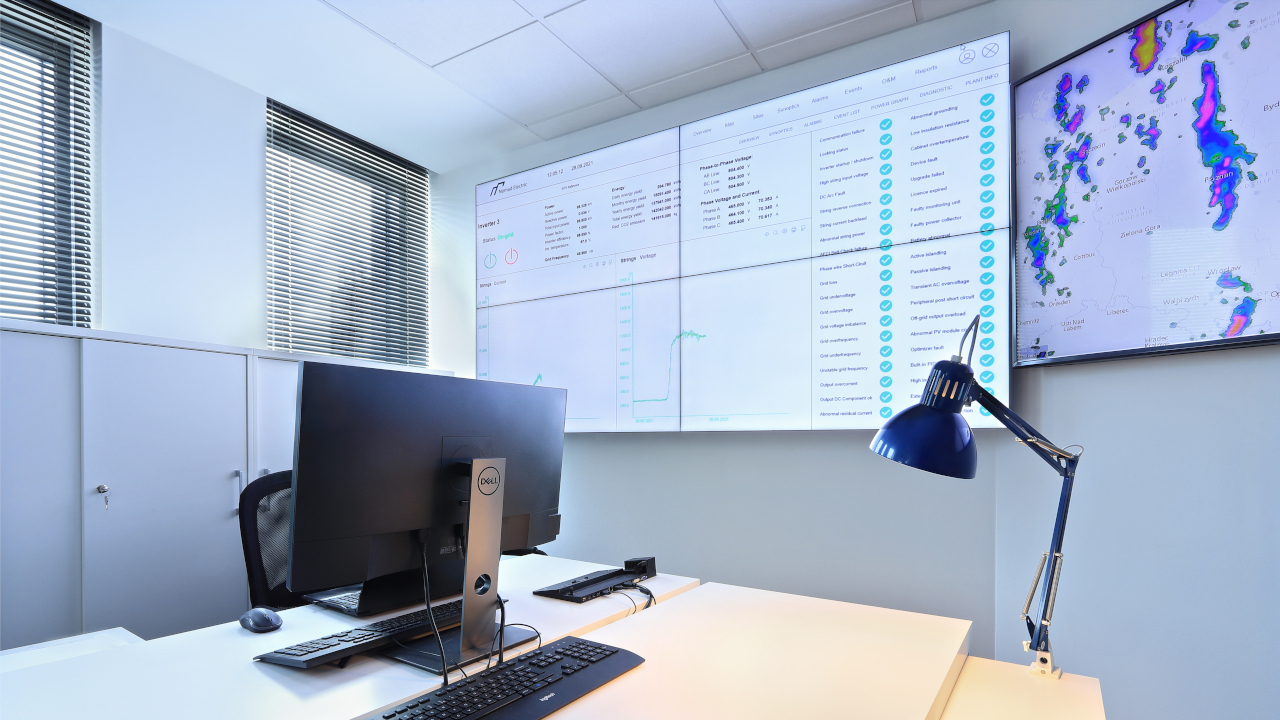
Companies that manage distributed infrastructure, fleets or production increasingly base their decisions on data flowing in simultaneously from many systems. The control room – a room where this data is brought together and observed in real time – is no longer the preserve of emergency services and network operators; it is becoming a tool for the management board. This is how the control room at Nomad Electric works: video walls deployed by PROAV display operational indicators for photovoltaic farms, and a designated member of the client's staff changes the data layout on the monitors. A well-designed control room shortens the path from data to decision, makes it easier to compare indicators and allows irregularities to be addressed before they affect the company's results.
A design that starts from the data sources. We begin work on the concept by identifying the systems the information is to come from, and by talking to the people who will use it every day. We only recommend equipment once it is clear what data the board needs to see on the screens and in what layout.
Wall, processor and software as one whole. We select, connect and commission all control room components together, with spare capacity for further signal sources and monitors, so expansion does not mean replacing the system.
Team independence and service support. We train the client's designated staff to change the content layout. Once the system is up and running, its operation is supported by the PROAV service department – which, in installations on which business continuity depends, matters as much as the choice of equipment.
Solutions used:
Industries:


Until recently, a company's market position was determined primarily by price, followed by service quality and brand image. These factors remain important, but organisations that want to improve results more effectively and stay ahead of the competition now look for an edge in data: in sales, resource utilisation, logistics and infrastructure performance. The prerequisite is being able to see this information together, in real time and in a clear form.
A control room is a room in which integrated audiovisual equipment and specialist software make it possible to display, monitor and analyse indicators, tables and charts from many of the company's systems.
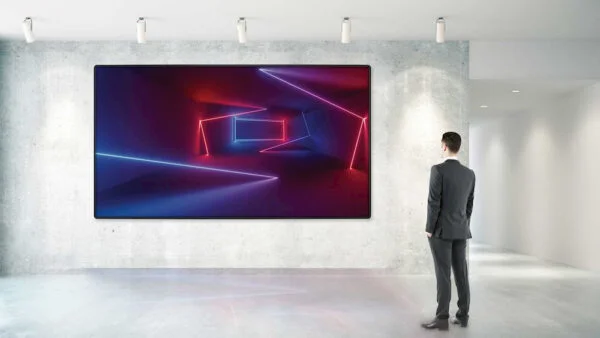
Video wall. The graphical presentation of data is handled by a video wall built from several high-resolution, high-contrast bezel-less monitors. Reports and summaries on the wall are legible both for the operator and for meeting participants.
Video wall processor. Signals from the sources reach the wall via a processor, which captures them and arranges them across the monitors in the chosen configuration.
Data management software. The operator must be able to change the content layout, define alerts and control incoming information. This is the role of data centre software, which continuously monitors IT and production systems, displays notifications and allows indicators to be managed.
We start the design with a list of the systems whose data is to appear on the video wall, and by establishing who will use it every day. We recommend solutions with the widest possible compatibility with the client's business applications, so that data showing the status of individual departments and business areas can be brought together on the screens.
We select the video wall, processor and software as a single system, with headroom for expansion with further sources and monitors. After commissioning, we hand operation over to the client's designated staff, so that changing the data layout does not require a service visit.


Better business decisions. Complete information on sales, resource utilisation and logistics processes, combined with the experience of the management team, makes it easier to develop effective growth strategies, assess opportunities and risks, and turn effort into results more quickly.
Savings through analysis of machine performance and utility consumption. Solutions deployed in the control room make it possible to monitor the efficiency of machines and teams. When software takes over infrastructure monitoring, staff can focus on other tasks, and changes to equipment configuration that improve performance or reduce energy consumption are easier to plan and implement.
More efficient analysis of dispersed data. A video wall can display many sources at once, allowing them to be set side by side and compared. Large high-resolution monitors make it simpler to analyse extensive sets of indicators and ensure that important information does not go unnoticed.
A higher level of security. Control room software does more than present data – it also continuously tracks the status of production machinery or fleet routes. When indicators exceed set thresholds, an alert appears on the video wall, allowing a threat to be addressed before it turns into a crisis.
A complete picture of the company's situation. Bringing together data from all departments in one place gives the board a coherent view of the state of the company that individual reports prepared in different systems cannot provide.
Industry, Energy and Transport. Manufacturing plants, renewable energy operators, mining and transport companies use control rooms to supervise infrastructure, fleets and production parameters in real time.
Business / Corporate. Security companies, food and IT businesses and corporate headquarters use control rooms to bring together operational and financial indicators for the management board.
For Nomad Electric, a company that builds and services photovoltaic farms, we created a system for presenting statistics, charts and indicators from files on workstations, websites and remote sources. We connected a 2x2 video wall of LG seamless monitors on pop-out mounts to a UVS WBC40 video wall processor and Lucidity software, in which a member of the client's staff creates any image layout they need. We prepared the system for expansion with further cards and monitors – details in the project description and in the inspirations gallery.
Where will the wall be located, and from what distance will operators and meeting participants view it? This determines the monitor size and the legibility of reports.
Which systems will the data come from, and is it accessible over the network? The answer determines the number of sources connected to the processor and the scope of integration with business applications.
Who will change the content layout on the wall, and how often? On this basis we select the software and plan the handover of operation to the client's staff.
Will the system be expanded in the future? If further sources or monitors are planned, we select a processor with spare card slots, as in the Nomad Electric control room.
Which events should trigger alerts, and who should receive notifications? We build alert rules and thresholds into the control room software configuration so that notifications reach the right people.
Will the room be used only by operators, or also for board meetings? The answers to these questions determine the scale of the video wall, the choice of processor and the scope of service support.
How do you turn operational data into a clear picture for the board?
We start every control room by identifying the data sources and how the operators work, and the choice of video wall, processor and software follows from that analysis – more about our control room projects.