Size matters. What you should know about large-format projection


A large image changes how a conference, performance or concert is experienced: it builds tension, supports the speaker's words and makes the content stay in the memory for longer. Large-format projection, however, calls for different tools than a meeting room – in the auditorium of the POLIN Museum of the History of Polish Jews, PROAV supplied and installed a Barco UDM-4K22 laser projector with a brightness of 22,000 lumens, which projects a 4K image onto a 12-metre-wide screen from a distance of 30 metres. We select installation projectors and their optics to suit the throw distance, screens to suit the character of the room, and image distribution and control to suit the way events are run. The result is an image that is legible even from the back rows and an installation that fits the architecture of the interior.
A design based on a site survey. We check the throw distance, lighting conditions and target image size in the room before proposing a projector, optics and screen. On that basis we advise whether a single device is enough or whether the image needs to be built from several projectors.
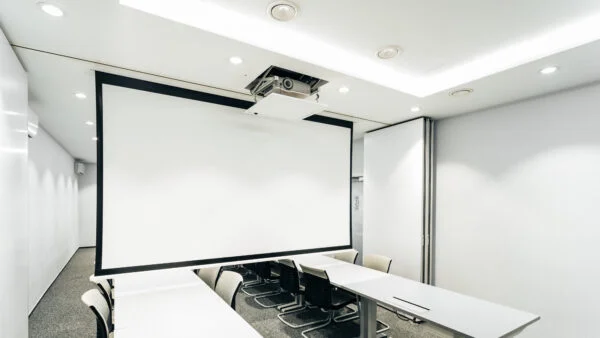
Installation that fits the architecture of the interior. We place projectors in projection booths, on ceiling lifts or on structures made specifically for the venue, and screens in ceiling recesses, on stage or on rigging. We agree the mounting method with the architect and the client so that the installation does not detract from the décor of the room.
Projection integrated with room control. We design signal distribution and control together with the projection, so that staff can start the image, divide the room or combine its parts from a wall-mounted panel.
Solutions used:
Industries:

POLIN Museum. In the auditorium for more than 450 people, a Barco UDM-4K22 projector operates in the projection booth on a dedicated mounting structure that we built. In two conference rooms we installed NEC laser projectors, ceiling-recessed screens and Key Digital HDMI matrices for signal distribution.
Hotel Mercure Mrągowo. The banquet hall of approx. 500 m² can be divided into four sections. Four projectors on ceiling lifts and four screens serve each section separately, and a control system with panels in each section allows the whole hall to be combined at the touch of a button.
Akademia Teatralna. On the stage of the main theatre hall we installed an Adeo Screen Max One screen measuring 650 × 488 cm.
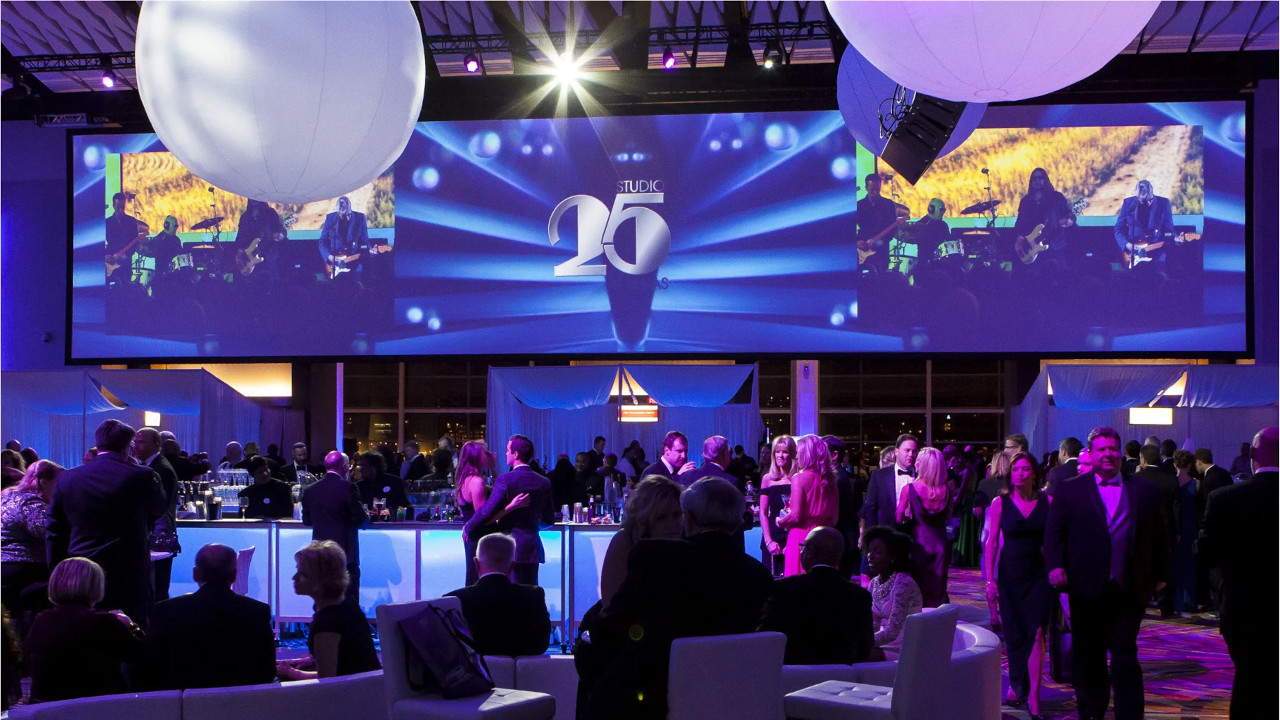
We remember what we see for longer than what we hear. At major events in large spaces attended by hundreds of people, a sound system alone is often not enough – it takes the combination of image and sound to create the full experience.
A large-format projection system consists of one or more projection screens around 6.5 metres wide, sometimes considerably wider, and installation projectors whose brightness and performance far exceed those of business and education models. Such installations often use edge blending, i.e. combining the images from several projectors: devices mounted side by side and carefully calibrated create a single panoramic image well over ten metres wide.
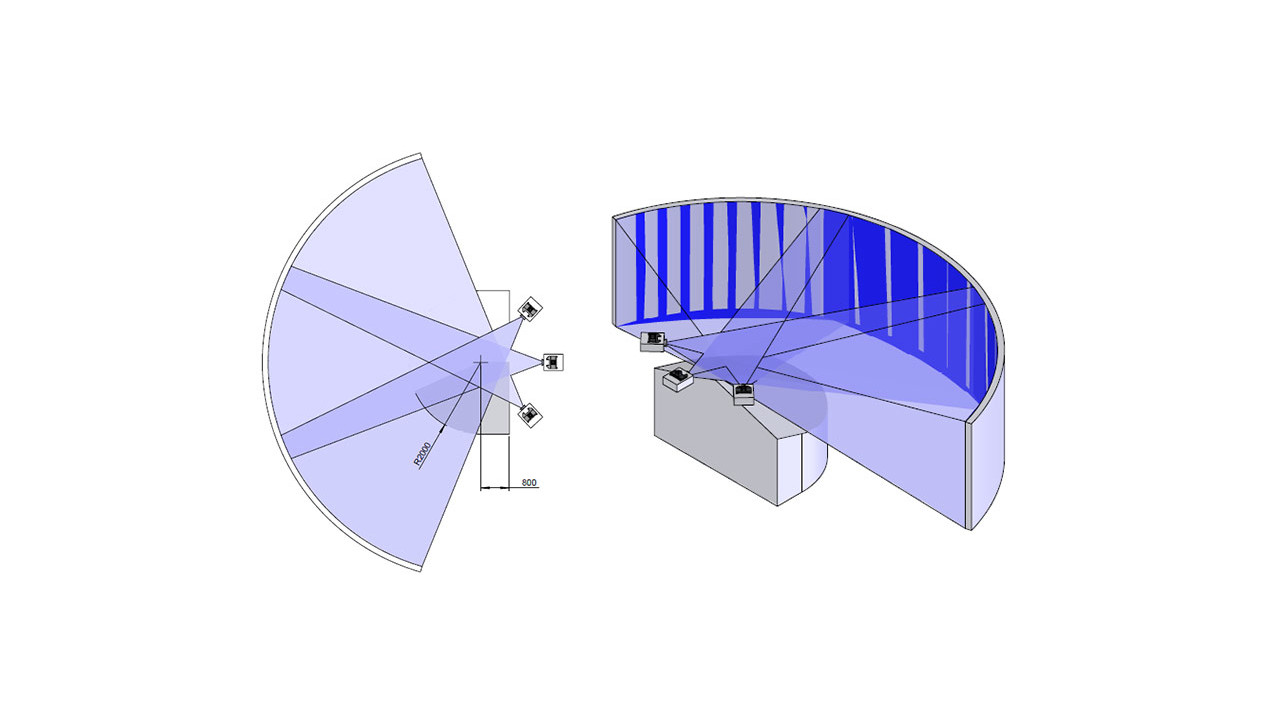

Optics matched to the distance. In large-format projection the image is often projected from a long distance, and on a huge screen every imperfection – low resolution, soft edges, jerky motion – is far more visible than on a monitor. That is why installation projectors have interchangeable lenses: a wide-angle lens for short distances and a telephoto lens for distances of around 30–50 metres.
High brightness and image quality. Brightness levels of 10,000, 15,000 and 20,000 lumens are standard – unavailable in most business models – along with high contrast and resolution, and features that automatically adjust image parameters and colour saturation to the conditions in the room. High output also means a lot of heat, so some installation projectors use liquid cooling. Devices like these, from manufacturers such as Barco, NEC, Panasonic and Epson, make it possible to display visualisations and projection mapping that audiences remember for a long time.
Roll-down screens. In congress halls, theatre halls and lecture halls we install roll-down screens with a width chosen to suit the room. An electric motor lowers the fabric from its case in a few seconds, and the mechanism is operated with a wall button or a remote control. Examples include Adeo Screen's Max One and Max Inceel series.
Frame screens. In concert halls and in mobile event installations, the screen is usually mounted on a metal rig, so the choice narrows to frame models with a borderless projection fabric.
Curved screens. To present content in an unconventional way, we use round-type screens, in which the fabric forms a partial semicircle. A viewer standing in the middle feels surrounded by the image on all sides – a solution often found in museum exhibitions.
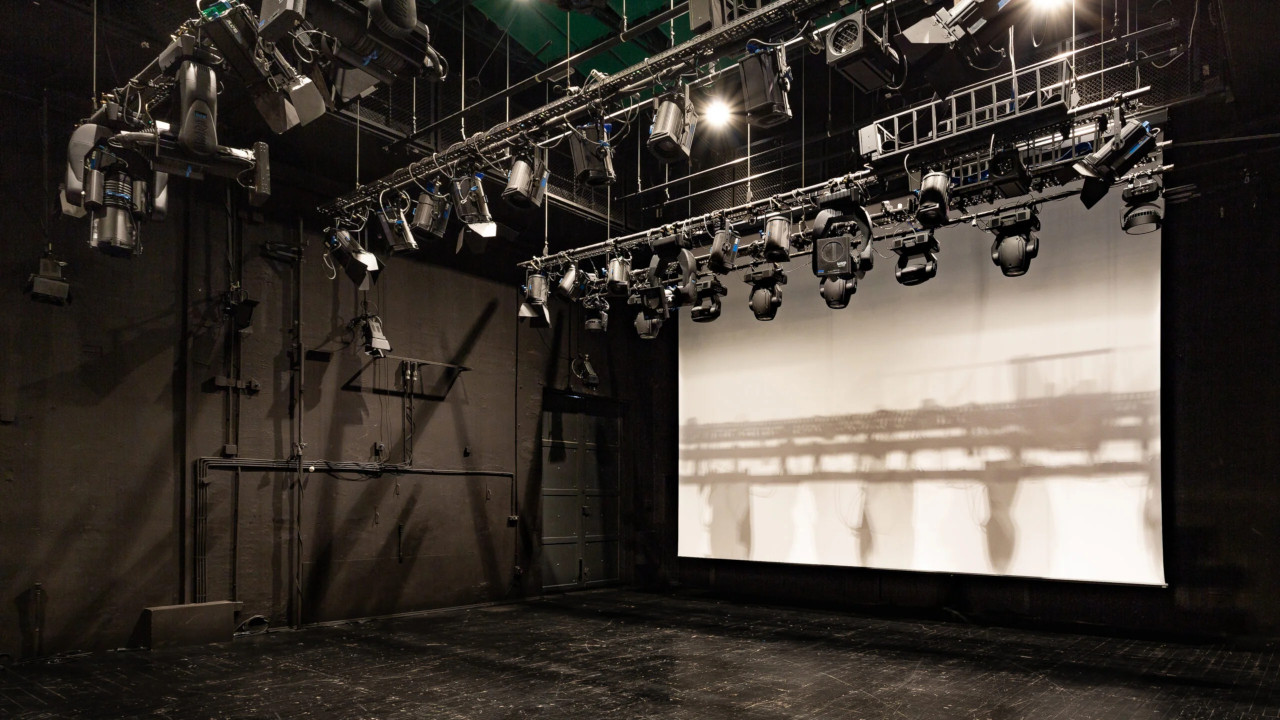

Cultural institutions. In museums, theatres and concert halls, a large image accompanies conferences, galas and film screenings, while curved screens help shape the exhibition space. These requirements are met by the system we commissioned in the POLIN Museum auditorium.
Hotels. Banquet and conference halls work sometimes as one large space and sometimes as several independent rooms. At Hotel Mercure Mrągowo each section of the hall has its own image, and we mounted the equipment so that it does not catch the guests' eye.
Higher education. In auditoriums and lecture halls the image must be legible for students sitting far from the screen, and on the stages of arts universities also under intense stage lighting, as in the theatre hall of the Akademia Teatralna.
Hundreds of completed AV projects have taught us that the quality of projection is determined by a few decisions made at the outset.
What is the throw distance and where will the projector be mounted? A booth, ceiling, lift or rig determines the choice of optics, and often also a mounting structure built for the specific room.
What are the lighting conditions in the room? The amount of daylight and stage lighting determines the required projector brightness and the type of screen.
What should the target image size be? The image width and the distance to the back rows determine whether one projector is enough or whether we combine the image from several devices.
Will the room be divided? If so, each section needs its own projector, screen and control panel.
Who will operate the system during events, and how? We match the room control and image distribution to the operators' skills and the way events are run.
Planning a room with large-format projection?
We select video projection systems on the basis of a site survey – from throw distance and lighting conditions to how the equipment is mounted and how the room is controlled.