AV systems for public offices, courts and ministries


PROAV designs, deploys and maintains audiovisual systems for public administration institutions: discussion and voting systems in debating chambers, projection in session rooms, video walls and video conferencing in boardrooms, and sound systems for conference rooms. Our clients include the Sejm (the lower house of the Polish Parliament), the Supreme Court, common courts, ministries and public offices. We have delivered systems for institutions such as the National Council of the Judiciary, the Supreme Court, the Ministry of Education and Science and the Marshal's Office of the Małopolska Region. Choosing a voting system for a council or public office? See our guide voting systems for debating chambers.
Predictable sessions. The chair gives and withdraws the floor from a single unit, and votes produce a result as soon as they close – visible to the whole room.
A clear image in a bright room. We select projectors and screens after analysing sunlight and viewing distances, so that content is legible from every seat without darkening the room.
Equipment ready to use without set-up. We configure the rooms so that in-person sessions and video conferences can start without time-consuming equipment preparation.
Integration with what already works. We connect new devices to the existing signal distribution and to equipment supplied by the client.
In public offices, courts and ministries we combine discussion systems with voting and participant identification, projection and video walls, room sound systems, video conferencing and room control. We tailor the scope to the size of the room, the number of participants and the rules of procedure.
Solutions used:
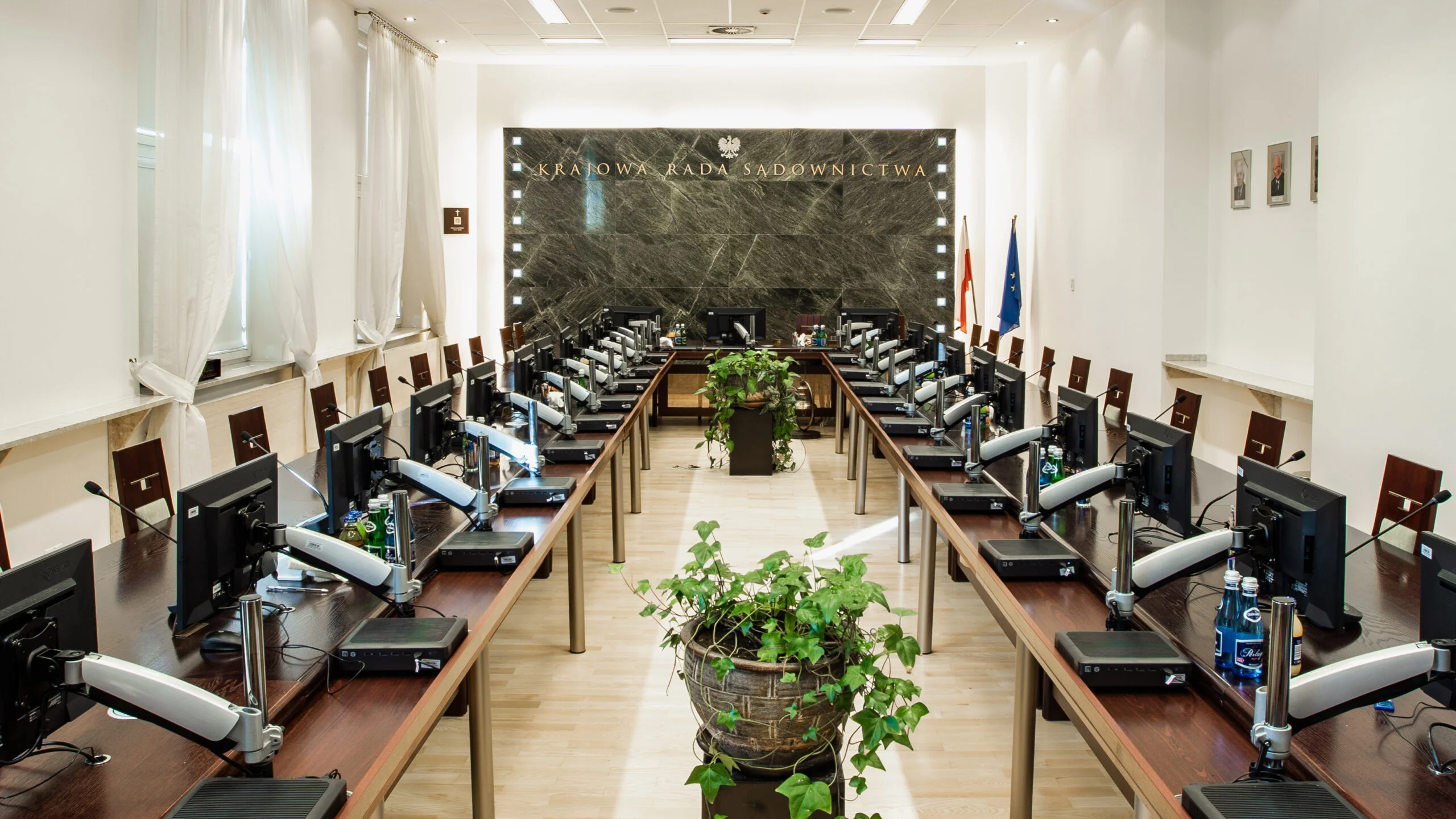
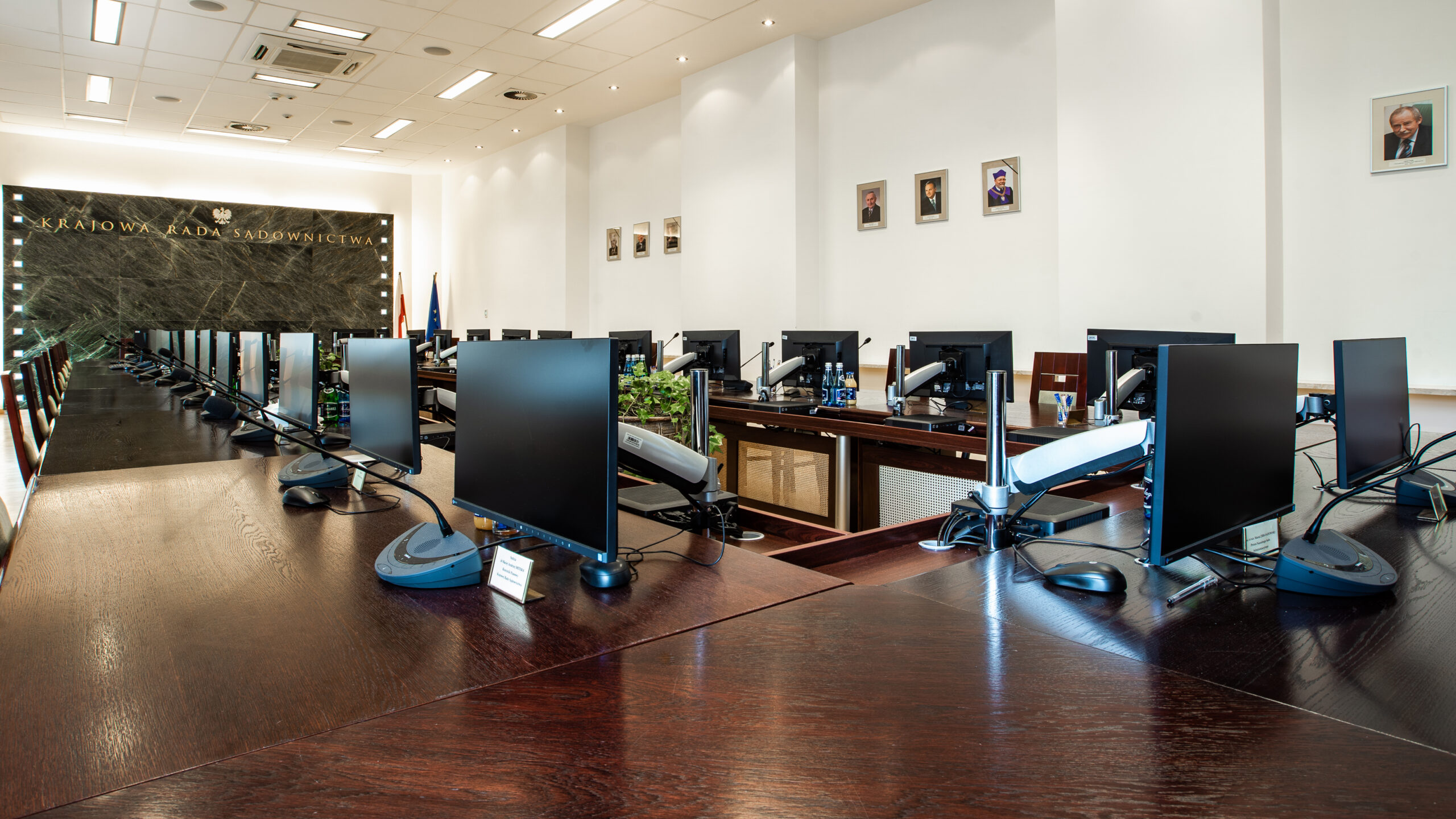
In the session room of the National Council of the Judiciary we installed a Televic Confidea G3 system: a central unit, 2 chair units and 28 delegate units. Each unit has a microphone, a loudspeaker and a voting function, and participants are identified by RFID cards.
Sessions are managed with Cocon software, configured to the way the Council works: the agenda, the order of speakers and votes with the result visible to the whole room. See the KRS project.
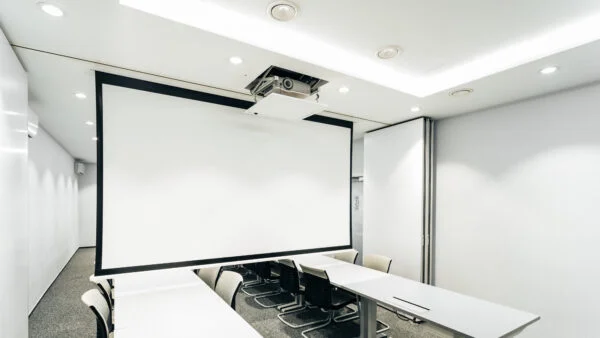
In the Supreme Court session room, the projectors installed by the previous contractor produced too dark an image. After analysing the conditions, we chose NEC P554U projectors with a brightness of 5300 ANSI lumens, mounted under the ceiling a few metres from the screens.
We integrated the new projectors with the existing signal splitter, so the same material is shown on both screens at once. See the Supreme Court project.

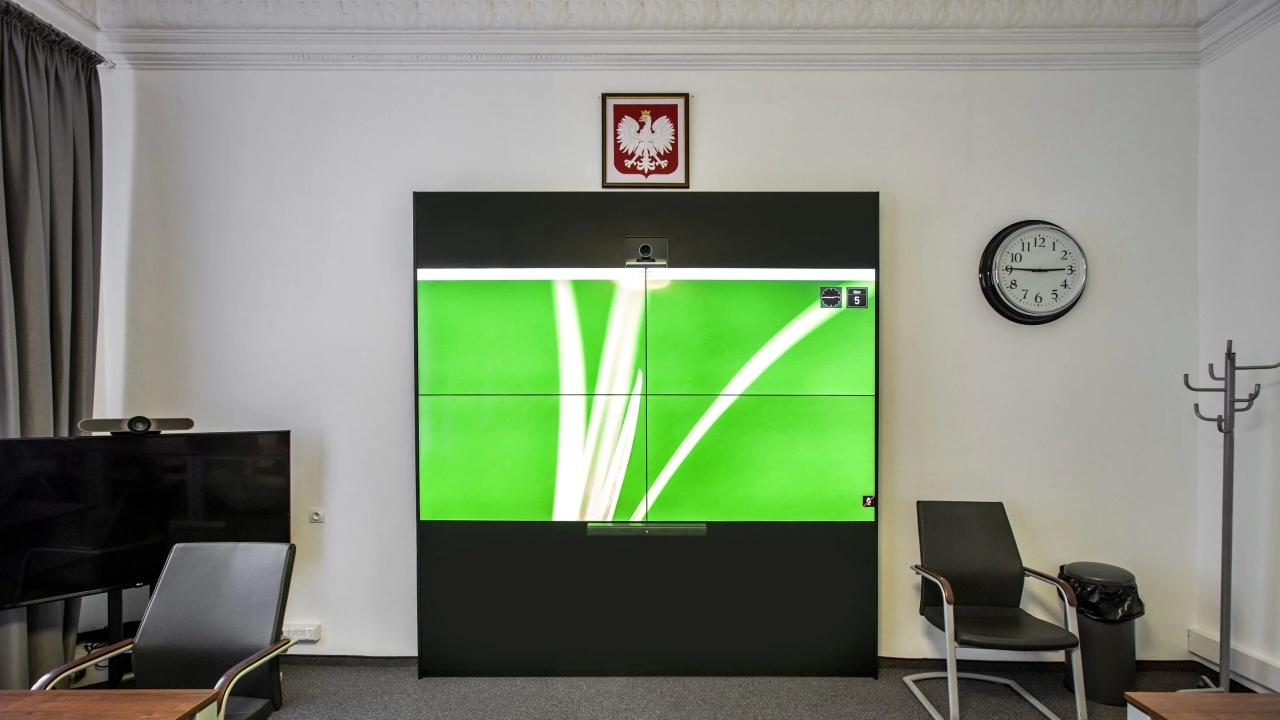
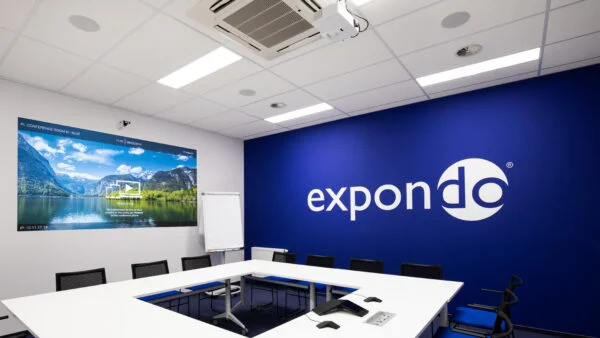
In the boardroom of the Marshal’s Office of the Małopolska Region we built a video wall from 4 LG 55″ seamless displays in a 2×2 layout, with a brightness of 500 cd/m², legible in daylight.
We integrated the system with a camera and a JBL soundbar supplied by the office – video conferences take place on the same screen, with no additional equipment to prepare. See the project.
In the two largest rooms of the Ministry of Education and Science we installed several dozen units of a TAIDEN HCS-5300 wireless discussion system. The units transmit audio via infrared, so they can be laid out without running cables.
The same system handles in-person sessions and video conferences. See the MEiN project.


In seven rooms at the ministry we matched the screens, projectors and sound system to the size of each room: Optoma projectors with a brightness of 4000 and 5000 ANSI lumens and Apart Audio ceiling speakers positioned so that sound is distributed evenly.
The rooms do not share a common signal distribution point, so we installed each room’s equipment in rack cabinets concealed in the furniture.
Click a question to see the answer.
One that lets the chair moderate the debate and run votes with an instant result. At the KRS we used Televic Confidea G3 with delegate units, RFID identification and Cocon software. More: discussion systems.
Yes. At the Ministry of Education and Science, TAIDEN HCS-5300 units transmit audio via infrared, so they can be laid out without running cables.
By matching projector brightness to the amount of sunlight and the projection distance. At the Supreme Court, projectors with a brightness of 5300 ANSI lumens deliver a clear image in daylight, and blinds are only a supplementary measure.
Yes. At the Marshal’s Office of the Małopolska Region we incorporated a camera and soundbar supplied by the office into the system, and at the Supreme Court – the existing signal splitter.
Yes. In the boardroom of the Marshal’s Office, video conferences take place on a 2×2 video wall, with the camera mounted above the displays, in line with the screen’s centre.
Yes. We have been equipping public institutions’ debating chambers and keeping them ready for use for years – a discussion system has to work predictably at every session.
How are sessions conducted? The number of delegates, the role of the chair, open or roll-call votes.
What are the conditions in the room? Sunlight, distance from the screens, existing cabling and signal distribution.
Are sessions broadcast or joined remotely? This determines the choice of cameras, sound system and video conferencing integration.
What equipment is already in use? Devices worth including in the new system rather than replacing.
Upgrading a debating chamber or session room?
Describe the room, the number of participants and how sessions are run – we will prepare solution options with a price for the complete installation. We start with a site survey.