Control room: the solutions behind business data centres


A business data centre, or control room, combines a video wall, a signal processor and content management software into a single system used by operators, analysts and management. The right specifications for these components depend on the size of the room, the viewing distance, the number of sources and even the structure of the building, which is why the PROAV design office prepares the concept for such a system before any purchasing decisions are made. A properly configured control room makes it possible to compare indicators from many sources on a single screen, detect anomalies faster and build long-term strategies based on a complete picture of the situation.
Specifications verified on site. We verify the size of the room, the viewing distance and the structure of the building during a site survey. The concept prepared on that basis specifies the wall, controller and software before the client orders equipment and installation work begins.
Components that work together. We put together displays, processor and software so that they work with the client's signal sources, and where the room is also used for meetings, we combine the wall with a camera and audio for video conferencing.
A budget without over-specification. We select equipment to suit business processes, the number of sources and the way operators work, so the organisation does not pay for specifications it will not use in day-to-day work.
Solutions used:
Industries:


Growing a business in the era of Industry 4.0 requires new processes. Alongside price, image and attention to customer needs, a company's position is increasingly determined by automation, extensive digitalisation and data analysis.
A control room combines the capabilities of audiovisual systems with software for managing distributed data. It supports decision-making, early detection of threats and a view of the organisation's entire market environment. We discuss the business benefits of deployment in more detail in the article Control rooms in business.
The foundation of a control room is a multi-display video wall built from large-format screens. Many manufacturers offer video wall modules, and the choice is determined not by the brand but by specifications matched to the installation. The most important factor is the bezel width: with bezels of around 0.9 mm the image is coherent and the dividing lines are almost invisible. This matters not only for aesthetic reasons – wider gaps make charts and tables stretched across several displays harder to read.
Equally important are brightness, contrast and colour saturation, which determine how legible the information is from a greater distance. In large installations we recommend displays with a wide viewing angle and, where justified, image enhancement features such as HDR.
Video walls are also increasingly built from LED modules, which provide good colour reproduction even in sunlit rooms and favourable energy efficiency. The choice between LED technology and LCD displays depends on the conditions in the room, the viewing distance and the budget.

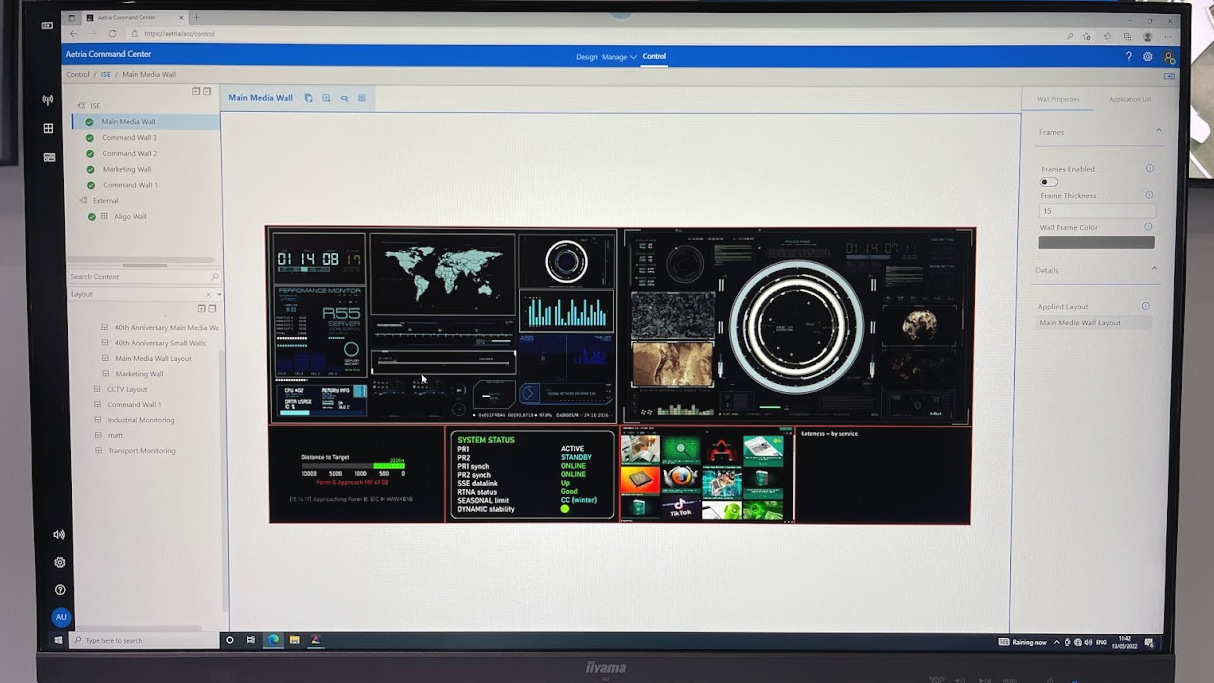
An essential component of a video wall is the controller, which sends source signals to the displays and manages them. The image from each source can be displayed in any position and at any size, scaled to the operator's needs.
The controller is a high-performance computer with a redundant (duplicated) power supply and signal management software. Depending on the number of displays, the main unit is expanded with input and output cards with HDMI, DVI or DisplayPort connectors.
Changing the layout of displayed indicators, selecting sources, sending alerts, defining rules and automating data presentation are the tasks of control room management software. What mainly sets it apart from digital signage applications is the automatic analysis of incoming data: when the system detects an anomaly in a defined event, it sends a notification to operators or displays an alert on the video wall. More advanced solutions learn by themselves which parameters indicate an event.
Public administration. In the meeting rooms and lecture halls of institutions, a video wall is used to present data, training materials and video conferencing images, and a room with two independent walls can be divided into two spaces – we describe examples below.
Uniformed services. In command centres and control posts, operators monitor maps, camera feeds and messages simultaneously, and the controller makes it possible to display each of these sources in any position and at any size.
Industry, Energy and Transport. In the dispatch centres of industrial plants, grid operators and transport companies, control room software detects parameter anomalies by itself and displays an alert before the incident affects business continuity.


In the main lecture hall of the Krajowa Szkoła Skarbowości (National Revenue Administration School) in Otwock we installed two independent video walls made of LG seamless displays: a main 4x4 wall and an additional 3x3 wall, which allow the room to be divided into two spaces, each with its own video system. Content is managed by a Key Digital multi-view matrix, which switches sources and divides the wall into areas of different sizes in any layout (photos of the 4x4 wall).
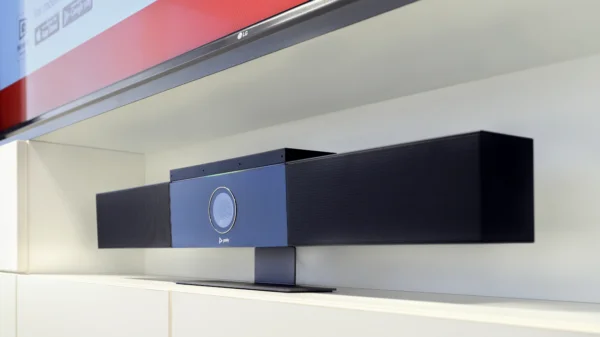
In the boardroom of the Marshal's Office of the Małopolska Region in Kraków, a 2x2 video wall made of 55-inch LG displays, housed in a black enclosure, is used for presentations and video conferencing – we integrated it with a soundbar and a camera mounted above the displays (inspiration gallery).
Equipment specifications follow from user needs, the size of the space and the structure of the building, which is why we precede every control room deployment with a site survey, during which we answer a few questions together with the client.
How many sources need to go on the wall, and from what distance will it be viewed? This determines the number and size of the displays, the bezel width and the controller's input and output cards.
Will the room also be used for video conferencing? If so, we design the wall together with the camera and audio, as in the boardroom of the Marshal's Office.
Who will manage the content layout? On that basis we select software and hardware that meet the requirements of business processes without inflating the budget.
Will the wall operate in a sunlit room? In such conditions we consider LED modules instead of LCD displays, comparing both options in terms of room conditions, viewing distance and budget.
Where to start a control room project?
We begin with a site survey and a concept prepared by our design office, and we describe the scope of our deployments on the page Control rooms.