Digital Signage: how to achieve a 40% increase in sales?


Digital Signage screens are now found in shops, public offices, corporate offices, hotels and museums: they guide visitors to their destination, inform them about the offer and influence purchasing decisions. Yet the effectiveness of such communication depends not on a single monitor but on a network of screens managed from one place – at the Pomeranian Science and Technology Park in Gdynia, PROAV connected 51 display points across six floors of the building into such a system. We design the placement of displays, select monitors and content management software, and then commission the whole system so that it can be run by a single operator. The organisation gains consistent messaging across many locations, content matched to the place and time of day, and remote monitoring of the screens' technical status. We describe how to plan a complete information screen system in our guide Digital Signage in the workplace.
Displays where your audience looks for them. Before we recommend monitor models, we analyse the communication goals and the routes taken by customers, guests or staff. This determines whether a portrait monitor, a video wall, a totem screen or an interactive display will work best in a given location, and at what height it should be mounted.
Monitors, players and software in one project. We select displays according to their daily operating hours, and content management software according to who will publish messages and from where. We discuss the players' network requirements with IT administrators before installation begins, and connect all screens into a network managed from a single workstation – from the client's server or in the cloud.
A system ready for the operator. After commissioning, we set up playback schedules and automatic switching on and off of the screens, and hand the system over to the person responsible for content together with message templates. This is how a single employee of the Pomeranian Science and Technology Park now manages the content on every screen in the building.
Solutions used:
Industries:


Pomeranian Science and Technology Park. On all six floors of the building we installed 51 portrait-mounted LG monitors which show, among other things, the location of company offices. Each screen has an EVEO URVE player connected to software on the client's server, so a single employee changes content, sets automatic switching on and off and checks remotely that the devices are working.
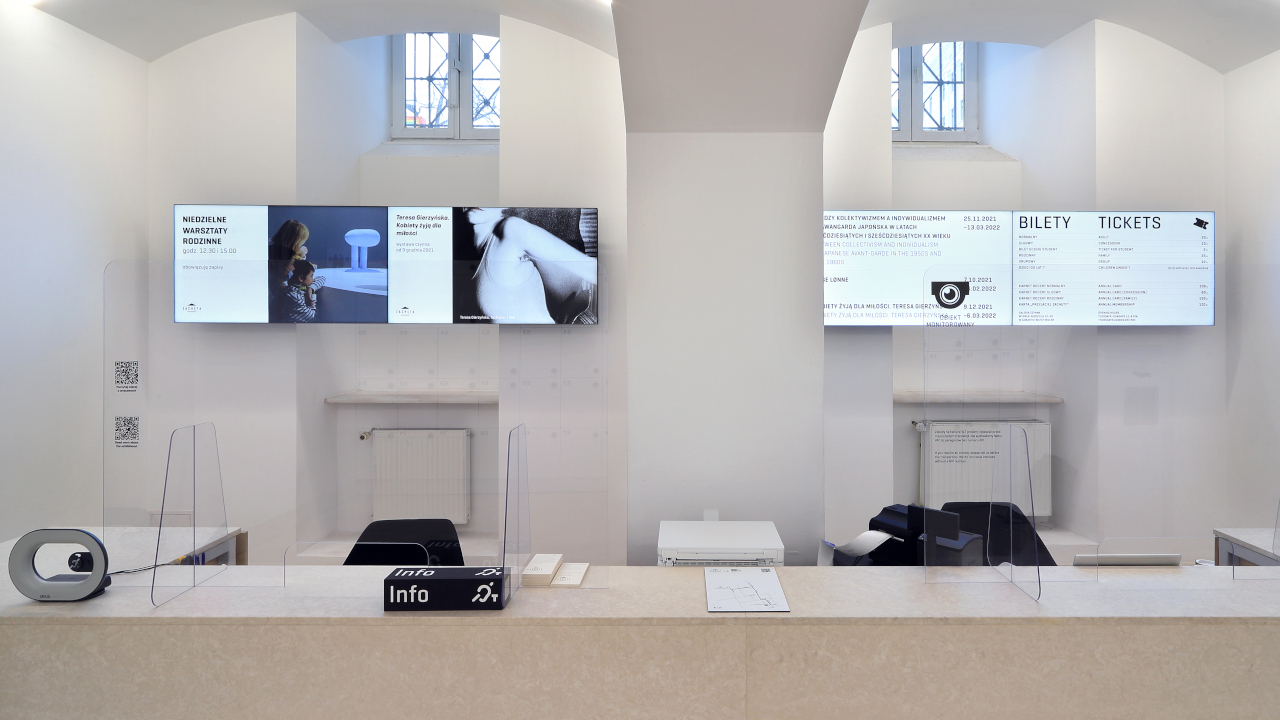
Zachęta National Gallery of Art. In the renovated ticket office area we installed four 55-inch LG monitors with LG SuperSign software. Narrow bezels and an understated form allowed the screens to blend into the architecture of the vaulted interior.
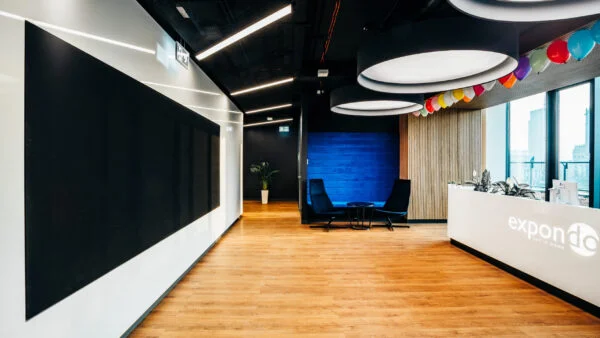
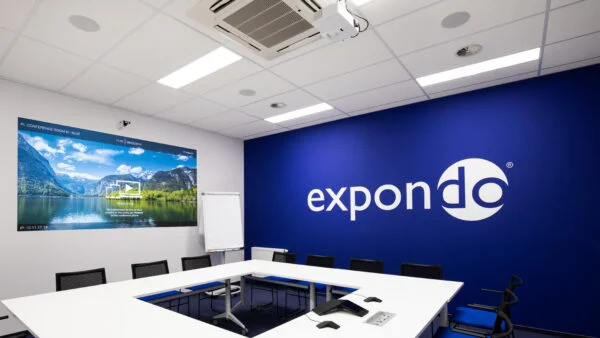
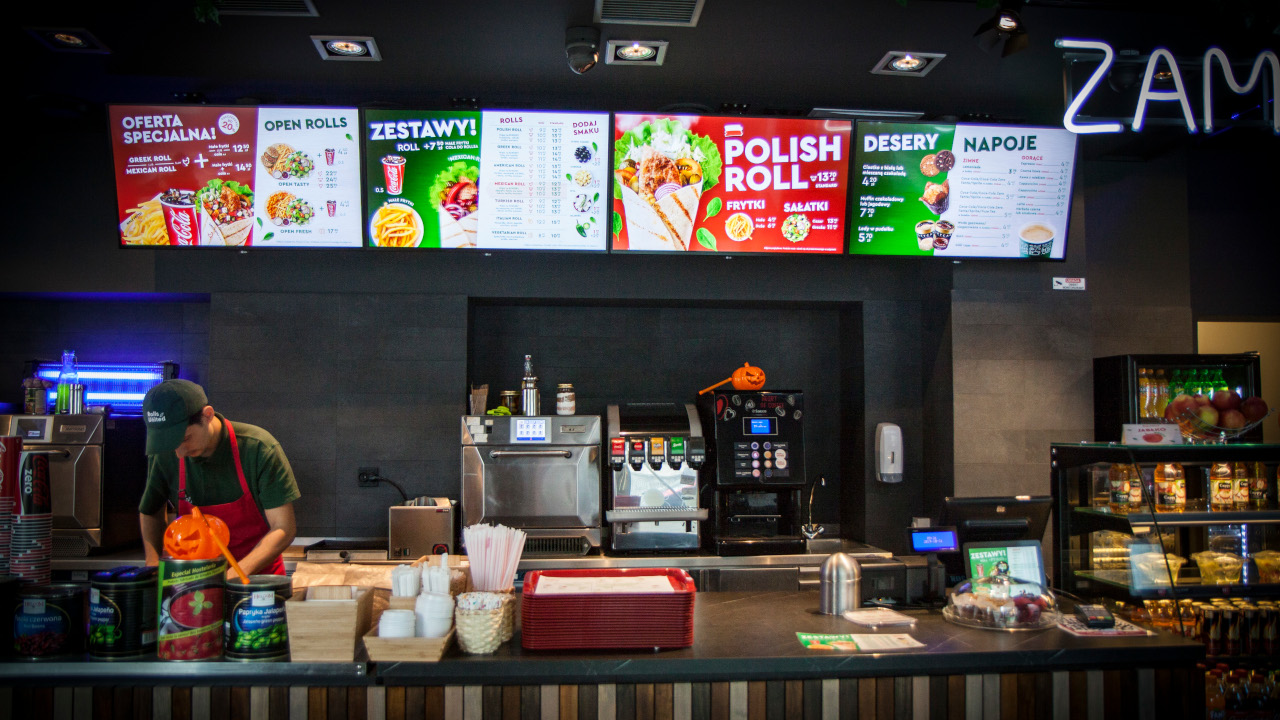
We have also commissioned solutions of this kind at the Expondo office in Zielona Góra, at Rolls United (a menu board above the counter) and on the Cerkamed trade fair stand.
A Digital Signage system is a set of interconnected technologies that allow messages to be displayed automatically to customers, guests and staff. A centrally managed network of monitors and software presents previously prepared information or advertising content in many places at once – but not always in the same way, because each screen can show a message tailored to its location and audience.
The display network. The first part of the system is the content displays: monitors with high brightness and good image quality, including interactive versions. They present graphics, text and video. Depending on the model, they can operate 16 or even 24 hours a day.
Content management software. The second part is the operator, who prepares materials, schedules when and where they are shown, and updates the content on the screens. The software makes it possible to automate playback and vary the message by location or time of day – a promotion on one screen, directions to the shop on the next. From the same interface, the operator remotely checks the technical status of the monitors and creates content templates and simple designs.
Content from many sources. Materials can be prepared in an application compatible with the system or uploaded as ready-made files from external graphics programs. As a result, messages quickly reach a variety of displays: video walls, large-format monitors, interactive displays, totem screens and information kiosks.
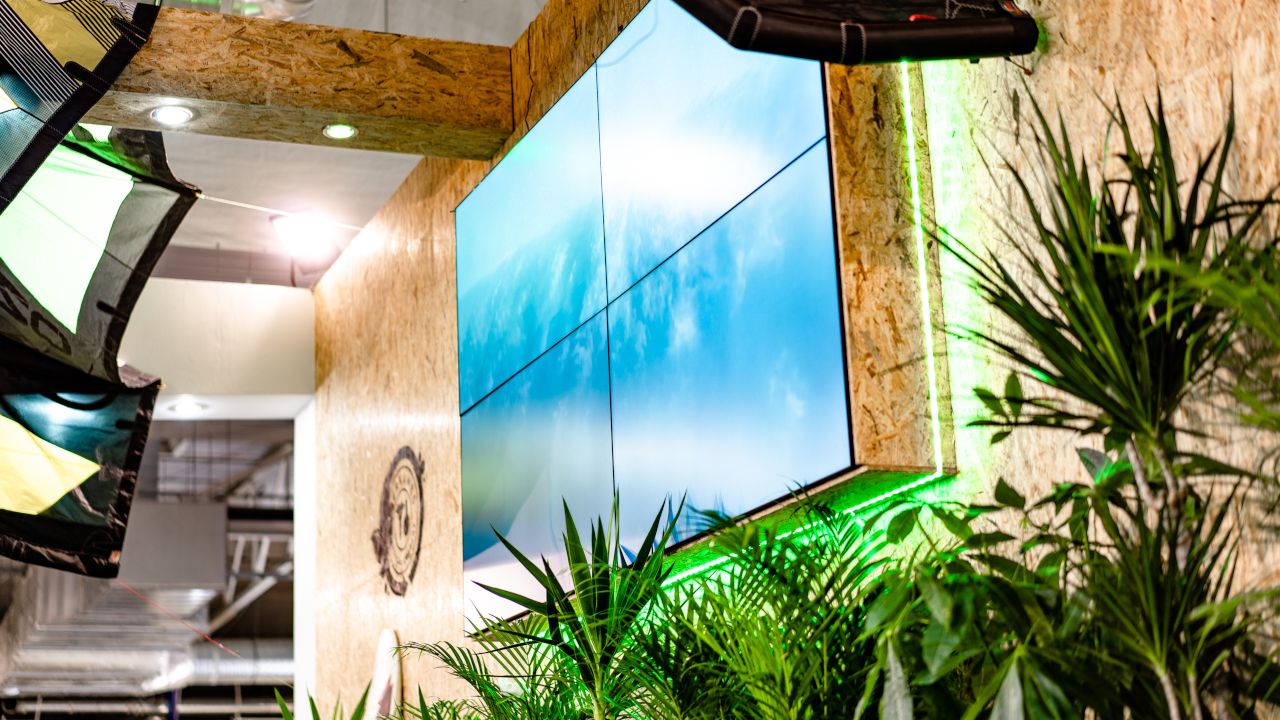
We deploy Digital Signage systems wherever an organisation wants to reach many people with up-to-date information: in public offices, corporate offices, hotels, shopping centres, restaurants, circulation areas and museums. We match the type of display and its location to the way the audience moves – differently in a ticket office area, a lift lobby or on a trade fair stand.
Retail and services. In shops and restaurants, screens show the offer where the customer makes the decision – like the menu board above the counter at Rolls United. The message can change depending on the time of day.
Cultural institutions. In museums and galleries, screens provide information about exhibitions, events and ticket prices, and their form has to harmonise with the interior. In Zachęta's ticket office area we selected monitors so that the content is legible from a distance of a dozen or more metres.
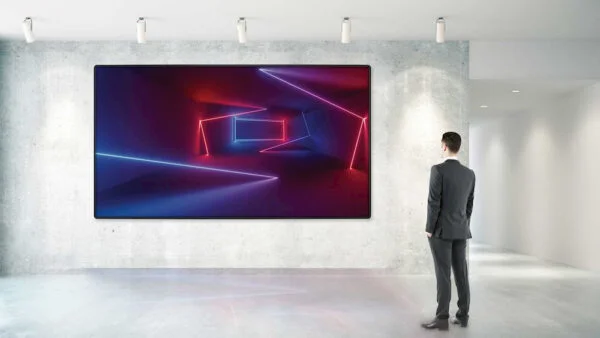
Business / Corporate. In office buildings, technology parks and showrooms, screens direct guests to the right offices and rooms and present the company's brand – this is how the screen network at the Pomeranian Science and Technology Park and the LED wall in the Expondo showroom work.
Messages that grab attention. Dynamic presentation is more legible than posters and banners, and the combination of image, sound and – on interactive displays – touch means the audience remembers the content for longer.
Support for sales and brand awareness. Screens at the point of sale increase the chance of impulse purchases and reinforce the logo and visual identity elements.
Remote management and automation. Playback is scheduled from a single workstation, and the system can be integrated with external solutions such as motion sensors.
The influence of screens on customer behaviour is illustrated by a Kantar TNS study prepared for Samsung Polska in 2018 in selected restaurants. In outlets where screens showed a special offer, sales of the promoted drink were on average 40% higher, and of the promoted dish 36% higher, than in outlets without Digital Signage. 65% of customers who ordered the advertised dish admitted that they changed their decision only once they were on site. This is the result of a single study in a single industry, not a guarantee of a similar effect in every venue – but it does show that a screen at the point of sale genuinely plays a part in the customer's decision.
What information should be displayed, and where? We start with the communication goals and the audience, because they determine where displays are placed and what type of content they show.
Who will prepare the content? This determines the choice of software and how the system is handed over to the operator.
How many displays, of what type, and for how many hours a day will they run? The number and type of screens and their operating hours determine the choice of monitors.
How will the system be managed – from the client's server or in the cloud? We also agree with the IT department how the players connect to the network and the rules for remote monitoring.
Planning a network of information or advertising screens?
We design Digital Signage content display systems from the analysis of communication goals and the places where your audience spends time, through to commissioning the software and handing the system over to the operator.