Projection systems – projectors and screens for conference rooms


Projection systems have to deliver an image that every participant can read – in a boardroom in daylight, in an auditorium seating several hundred people and in a ballroom beneath chandeliers. PROAV designs and installs video projection systems that combine projectors, projection screens and mounting accessories selected for the specific room. We determine projector brightness for a conference room, the type of screen and the mounting position based on viewing distances, lighting and the architecture of the room, not on the catalogue alone. In our projects we use equipment from Epson, NEC, Optoma, Panasonic, Sony, Barco and BenQ, together with Adeo Screen and Kauber screens. We integrate projection with the room control system and video conferencing, so that a single button starts the presentation.
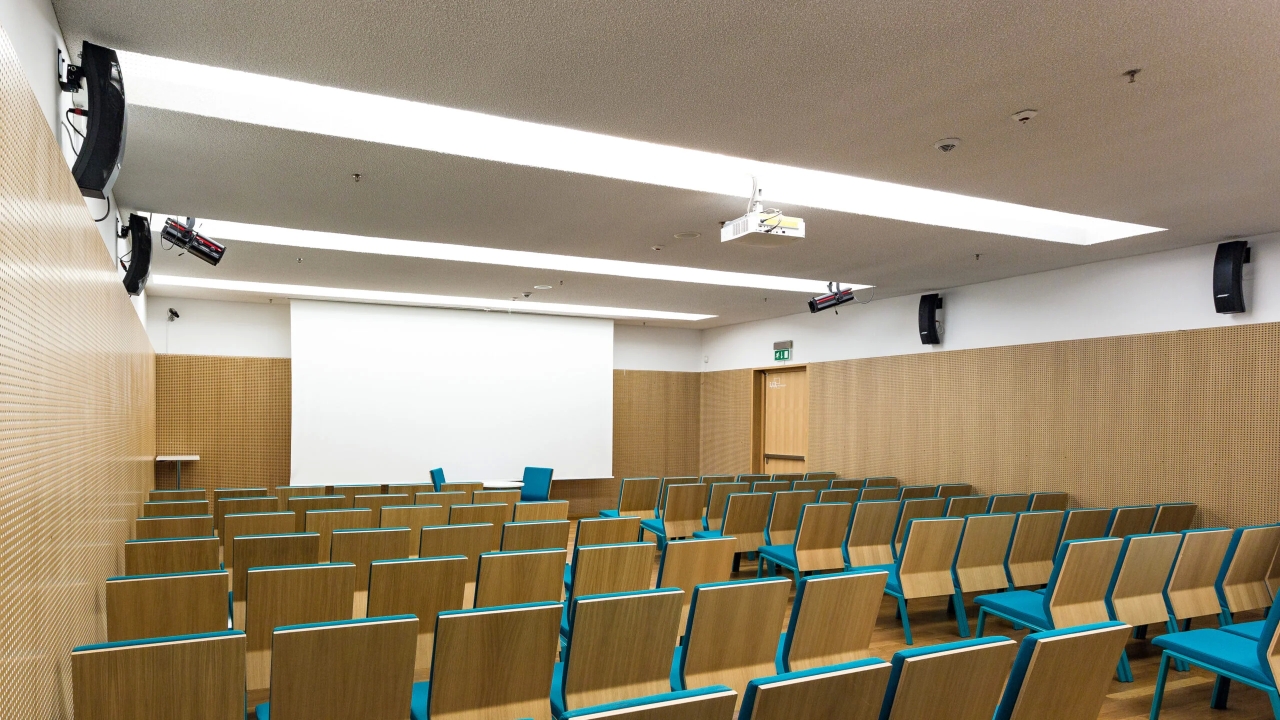
An image matched to the conditions in the room. Before selecting equipment, we analyse the room’s brightness, the projection distance and the screen layout – this is how we restored a clear image in the session hall of the Supreme Court.
Installation in harmony with the architecture. We plan projectors on ceiling lifts and built-in screens together with the architect, so that the equipment does not disrupt the interior design.
Projection as part of the room system. We connect it with centralised control, the sound system and video conferencing, so the room is ready for a presentation with no preparation.
Projection delivers an image several metres wide at a reasonable cost, which is why it works well in large conference rooms, auditoriums, banqueting halls and theatres. In smaller rooms we compare it with large-format displays and LED screens.
Used in projects:
Industries:
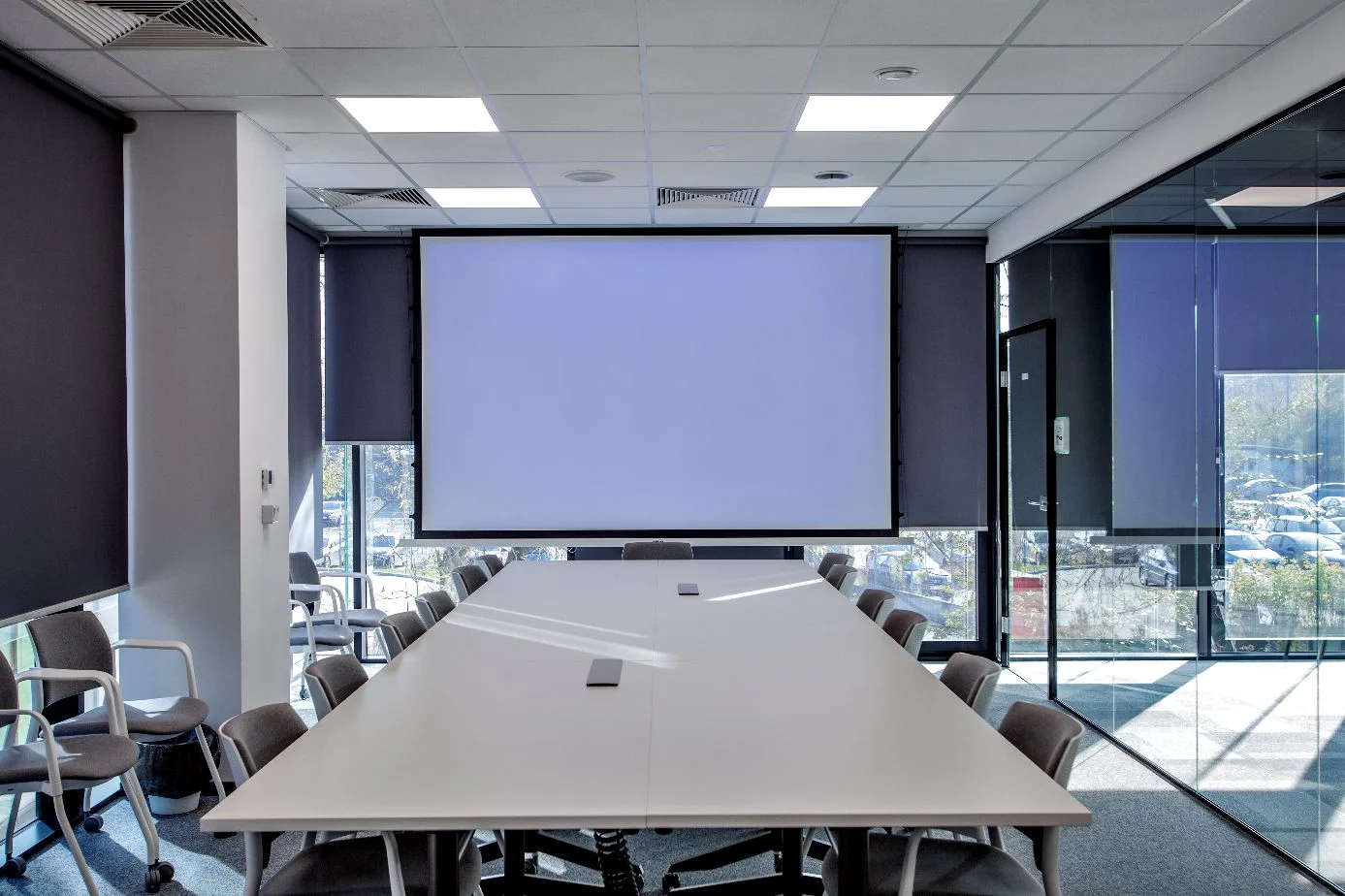

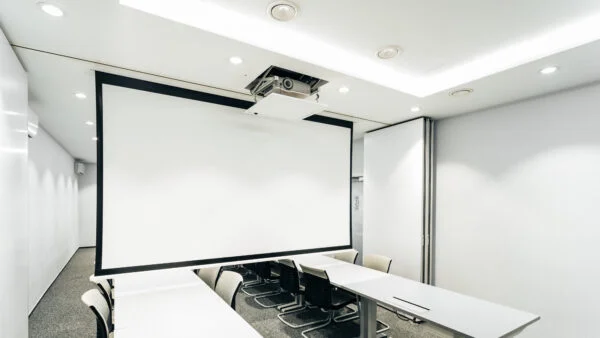
In prestige and multi-purpose rooms we recommend electric ceiling-recessed screens and projectors on lifts. When the presentation ends, the equipment disappears into the ceiling and the room returns to its primary function.
This is how we fitted out the rooms of the Polish Bank Association (Związek Banków Polskich), where the suspended ceilings were designed from the outset with AV equipment in mind.

In the auditorium of the POLIN Museum, which seats more than 450 people, we installed a projection system that takes into account the installation conditions in the projection booth and the long-term equipment reliability the client expected.
In large rooms we use high-brightness installation projectors with interchangeable lenses, which allow the projection distance to be matched to the architecture – from long-throw to wide-angle lenses.

When a very wide or panoramic image is needed, we combine several projectors using edge blending, calibrating them so that they form a single, seamless image.
In the banqueting hall of the Hotel Mercure Mrągowo, covering more than 500 m², we positioned the projectors and screens so that the system can operate as one installation or as four independent ones – depending on how the partition walls are set.

We determine the size of the active area based on the distance to the furthest viewer, and the type of fabric based on the room’s lighting. Electric screens are controlled from a panel or from the room control system.
On the main stage of the Theatre Academy we installed a large-format Adeo Screen screen that maintains image quality even while intense directional spotlights are in use.


For ceiling screens we recommend models with side tensioning, which keep the fabric perfectly flat. As a result, the image keeps its proportions and the fabric is less prone to damage.
Large-format screens in theatres, congress centres and assembly halls work with high-brightness installation projectors or with multi-projector set-ups. We write more about large installations in the article What you should know about large-format projection.
In the ballroom of the Regent Warsaw Hotel, which accommodates 450 guests, light from the projector fell on the chandeliers and their shadows were visible on the screen. After analysing the ceiling geometry, we selected a new projector and mounting position that eliminated the shadows without altering the room’s décor.
In hotel function rooms, what matters is how quickly a room can be prepared for different events, so we combine projection with simple control and connection points for speakers.


Laser projectors require no lamp replacement, are ready to use immediately after switching on and maintain stable brightness over a long service life. That is why we usually recommend a laser light source for rooms used every day.
When choosing, we compare the purchase price with the operating and service costs over the entire service life.
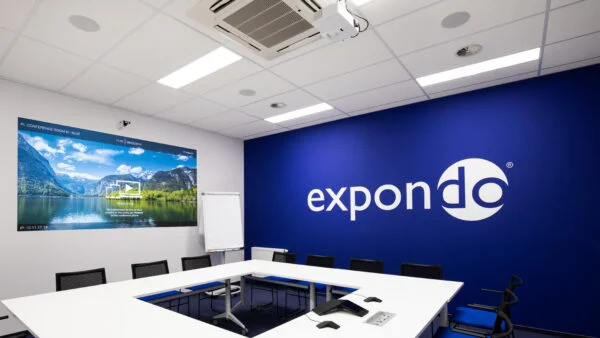
Business / Corporate. Conference rooms and boardrooms, including bright, glazed ones – such as the TM Toys room with daylight-resistant projection.
Cultural institutions. Auditoriums, cinema halls and theatre stages with high-brightness projection.
Hotels. Banqueting and conference rooms divided by movable walls.
Public administration. Council chambers and meeting halls where materials must be legible to everyone present.

Click a question to see the answer.
We match the projector’s brightness to the room’s lighting and the lens to the projection distance. For rooms used every day, we usually recommend a laser projector, which requires no lamp replacement and maintains stable brightness. In bright, glazed rooms we use higher-brightness projectors and daylight-resistant screen fabrics.
We determine the size of the active area based on the distance to the furthest viewer, and the type of fabric based on the room’s lighting. For ceiling screens we recommend models with side tensioning, which keep the fabric flat.
A laser projector requires no lamp replacement, is ready to use immediately after switching on and maintains stable brightness for longer. When choosing, we compare the purchase price with the operating and service costs over the entire service life.
Projection delivers an image several metres wide at a reasonable cost, which is why it works well in large rooms, auditoriums and banqueting halls. An LED screen does not require the room to be darkened and delivers a brighter image, but it costs more – we describe the comparison in our guide LED screens – how to choose?.
Yes. In prestige and multi-purpose rooms we install electric ceiling-recessed screens and projectors on lifts. After the presentation, the equipment disappears into the ceiling, and we plan the installation together with the architect.
We combine several projectors using edge blending and calibrate them so that they form a single, seamless image. In rooms divided by movable walls, the system can operate as one installation or as several independent ones.
No. An initial quote and a consultation with a PROAV engineer are free of charge. To prepare a quote, we need the room dimensions, the distance to the furthest viewer, information about windows and lighting, and the possible projector mounting position.
How large is the room and where do the viewers sit? The distance to the furthest viewer determines the screen size.
How much light enters the room? Windows and lighting affect the projector brightness and the type of fabric.
Where can the projector be mounted? We check the ceiling, building services and the distance from the screen.
Is the room divisible or multi-purpose? If so, we plan several independent projection systems.
Planning a projection system?
We design projection for corporate rooms, hotels and cultural institutions. We start with a site survey and an analysis of the room’s lighting.