LED screens and video walls for business and institutions


An LED screen in the lobby, a video wall in the boardroom or a large display wall in a lecture theatre – these are solutions that PROAV designs and installs for businesses, public authorities and institutions. We match the technology – a seamless LED screen or an LCD video wall – to the viewing distance, the room's lighting and the type of content on show. We take responsibility for the whole project: structural and enclosure design, supply, installation, image calibration and integration with room control, video conferencing and Digital Signage. In our projects we use screens and displays from manufacturers including Samsung, LG, NEC and Vestel, together with video wall controllers from Datapath, Dexon Systems and Ultimate Visual Solutions. The result is an image that stays legible in daylight, with no visible seams, and is simple for users to operate. Planning a screen for a conference room? Read our guide LED screen for a conference room.
On this page: LED wall – price · LED in a video conferencing room · how a project runs · frequently asked questions · guide: how to choose an LED screen
Pixel pitch matched to the viewing distance. We determine pixel pitch, brightness and screen size based on how far away viewers sit and on the lighting, so your budget is not spent on resolution nobody will ever see.
A screen built into the architecture. We work with architects and joinery contractors so that the screen sits flush with the furniture or wall and service access is planned from the outset – as in the Siemens conference room, where the LED screen is more than 3 metres wide.
Content and control in a single system. We connect the screen to a video wall controller, a Digital Signage system and the room control, so that operating it comes down to choosing a source or a content schedule.
LED screens are built from frameless modules, so they form a single uniform surface of any size and aspect ratio, with brightness suited to bright spaces. LCD video walls offer high resolution at short viewing distances, usually at a lower cost, with narrow seams between the displays. We confirm the choice of technology during the site survey. You will find a detailed comparison of LED, an LCD wall and a projector in the table below.
Used in projects:
Industries:
The most important parameter of an LED screen is its pixel pitch. The closer viewers are to the screen, the smaller the pitch needs to be. Conference rooms usually use fine-pitch screens, while in lobbies and spaces viewed from further away a larger pitch delivers the same effect at a lower cost.
The next decisions are brightness matched to the lighting, resolution and content aspect ratio, the mounting method – on the wall, built in or on a free-standing structure – and service access. We prepare a comparison of options so you can weigh cost against effect before deciding.
The details – a pixel pitch table, sizing the screen to the room, a comparison of LED, LCD and projection, and the factors that drive price – are covered in our guide LED screens – how to choose?
An LED wall is a large-area LED screen assembled from modules in any size and format – from a screen in a conference room to a wall in a lobby or dispatch centre. The price of an LED wall depends above all on the pixel pitch and the area, and then on the LED technology, image processor, mounting structure, installation and integration with the room.
That is why for every enquiry we prepare 2–3 options – e.g. P1.25 and P1.56 in the same size – with the price of the complete installation and a description of what you gain with each. All we need are the wall dimensions, the viewing distance and a description of the content; the quotation is free of charge.
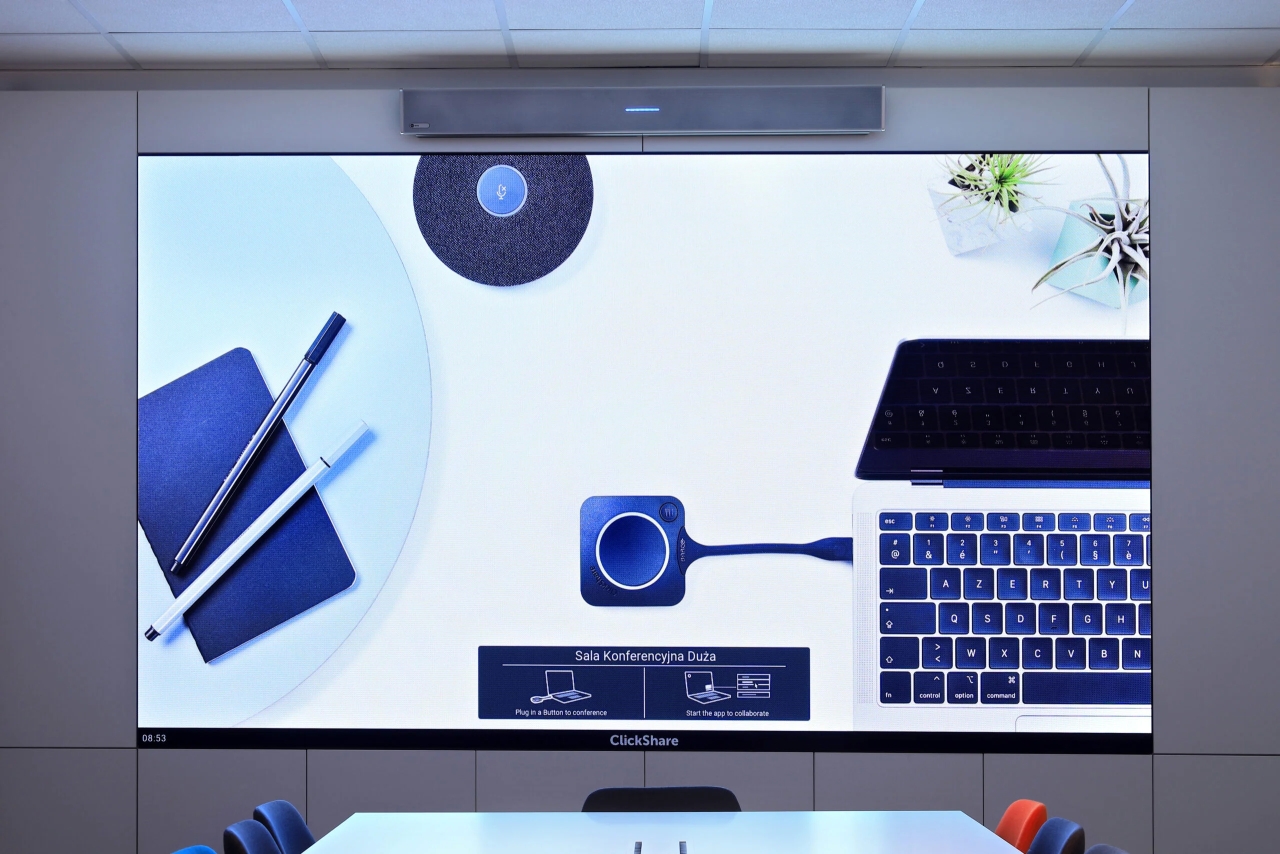
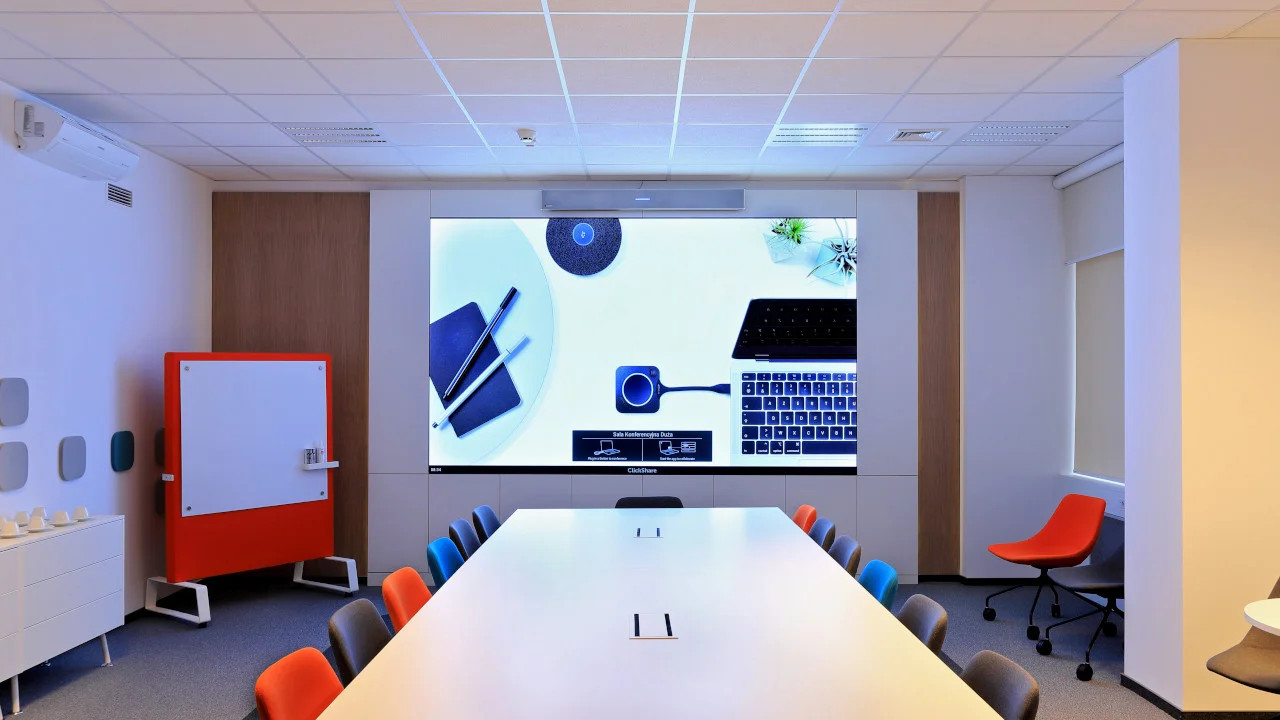
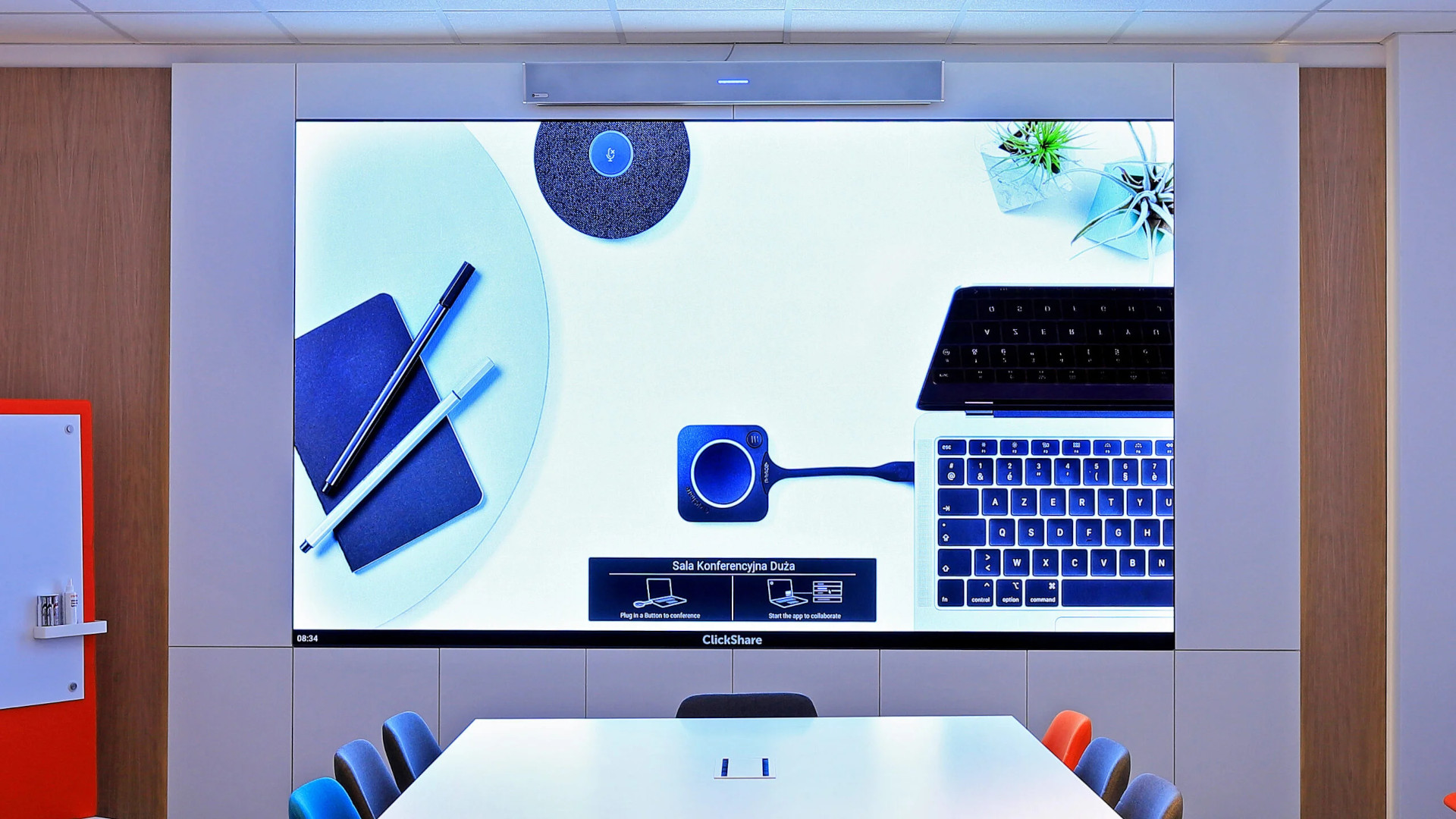
In the Siemens conference room we built an LED screen with a 1.6 mm pixel pitch and a width of more than 3 metres (over 130 inches, 16:9 format, Full HD resolution) into bespoke furniture.
We chose LED technology for its image brightness in a room with a lot of daylight and because the screen could be built in neatly, with no visible seams. The screen works together with the video conferencing and sound systems, which we also designed and installed.
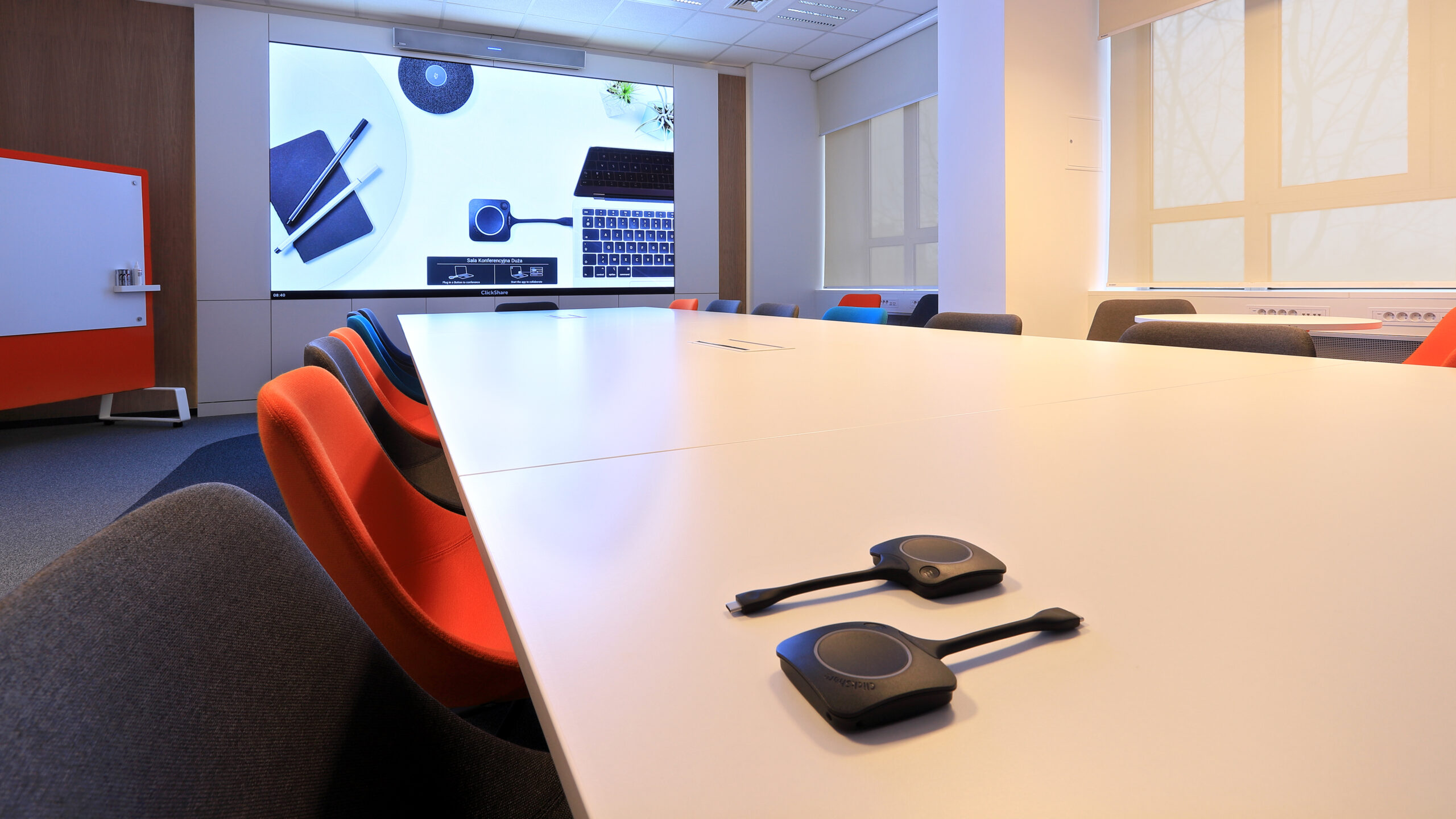
LED screens are associated with advertising and events, but they are increasingly replacing projectors or multiple displays in conference rooms. For a room to work well in Teams or Zoom, the screen alone is not enough. What we pay attention to:
This is how the Siemens room works: a P1.6 LED screen more than 3 m wide has replaced the projector, alongside Nureva audio conferencing and Barco ClickShare.
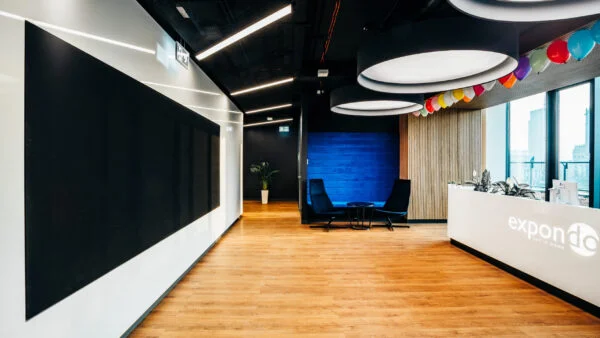
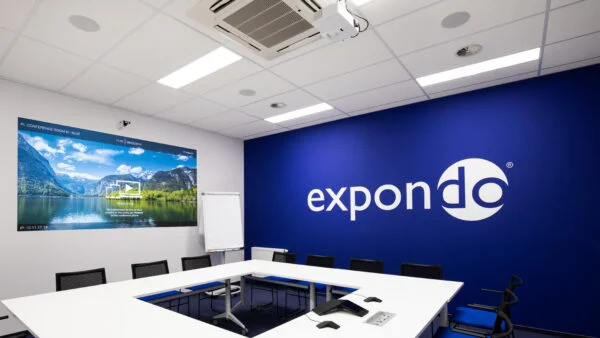
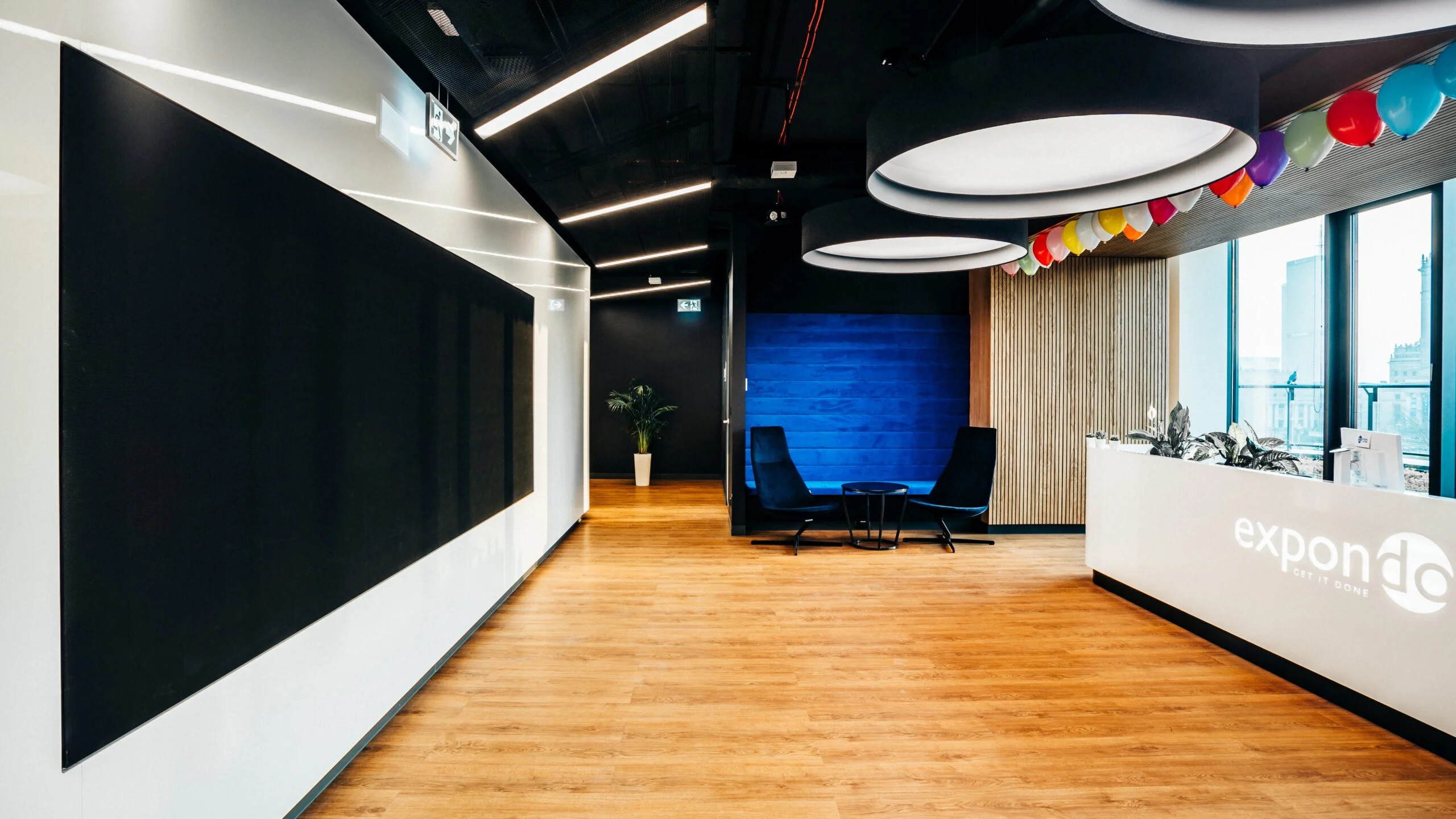
In the Expondo offices in Warsaw and Zielona Góra we installed LED screens with a 2.5 mm pixel pitch, which serve as information and advertising displays in the lobbies.
In commercial spaces an LED screen catches the eye from a long distance, and content can be changed remotely. For installations like these we plan for continuous operation, power, cooling and remote monitoring of the screen’s status.

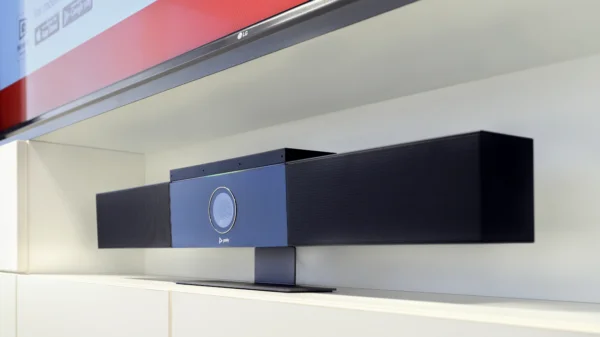
In the boardroom of Urząd Marszałkowski Województwa Małopolskiego we installed a video wall made of LG displays, integrated with a camera and a JBL soundbar. It is used to present performance indicators and for video conferencing.
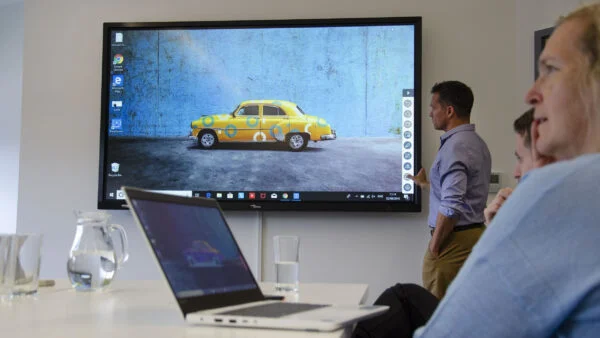
In boardrooms a video wall shows several sources at once – reports, a presentation and the remote participants – and the window layout changes at the press of a single button on the control panel.


The main lecture hall of Krajowa Szkoła Skarbowości in Otwock has two independent video walls made of LG displays, with content control by Key Digital. After the hall was refurbished, we reinstalled the system and expanded it.
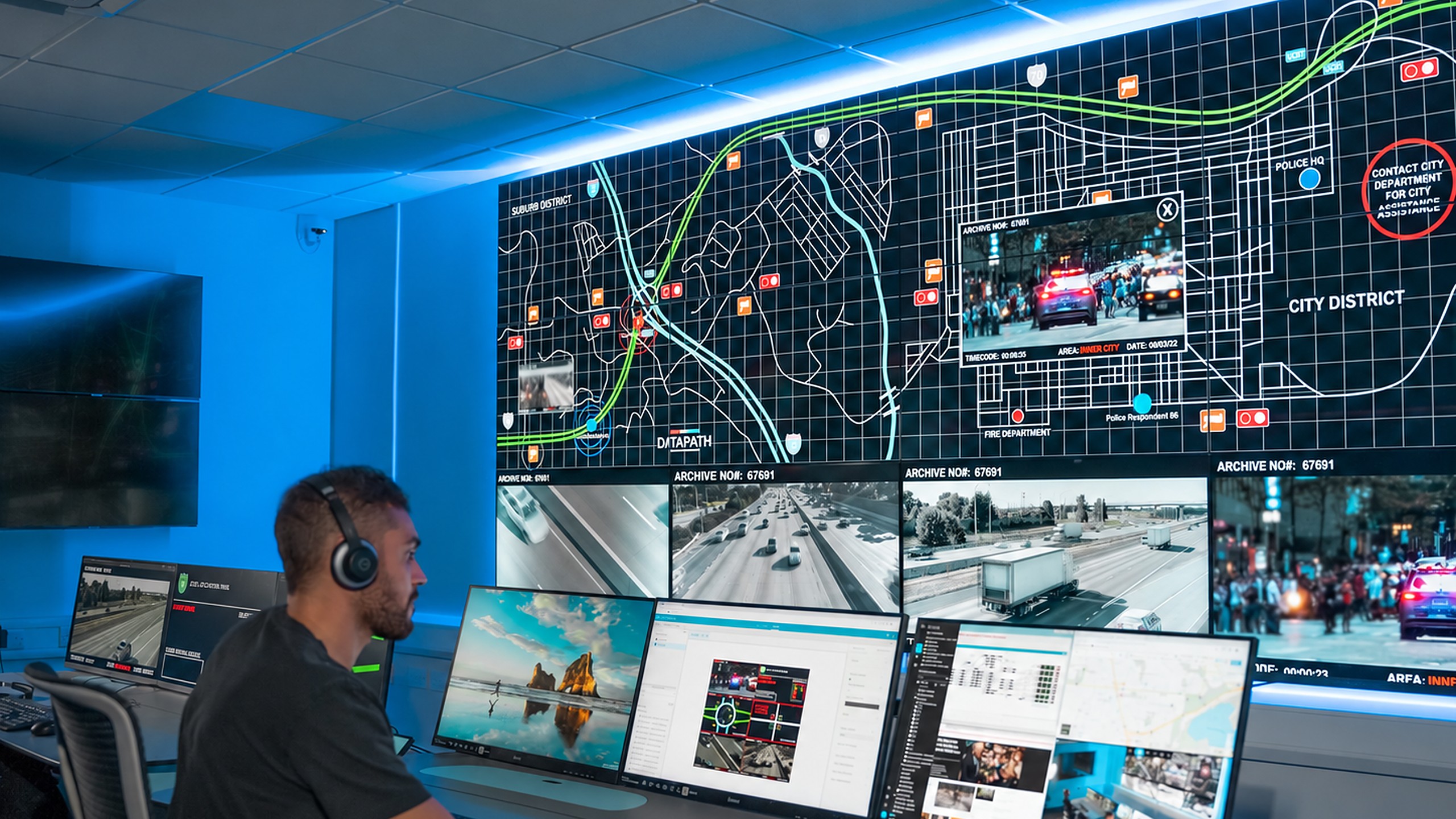
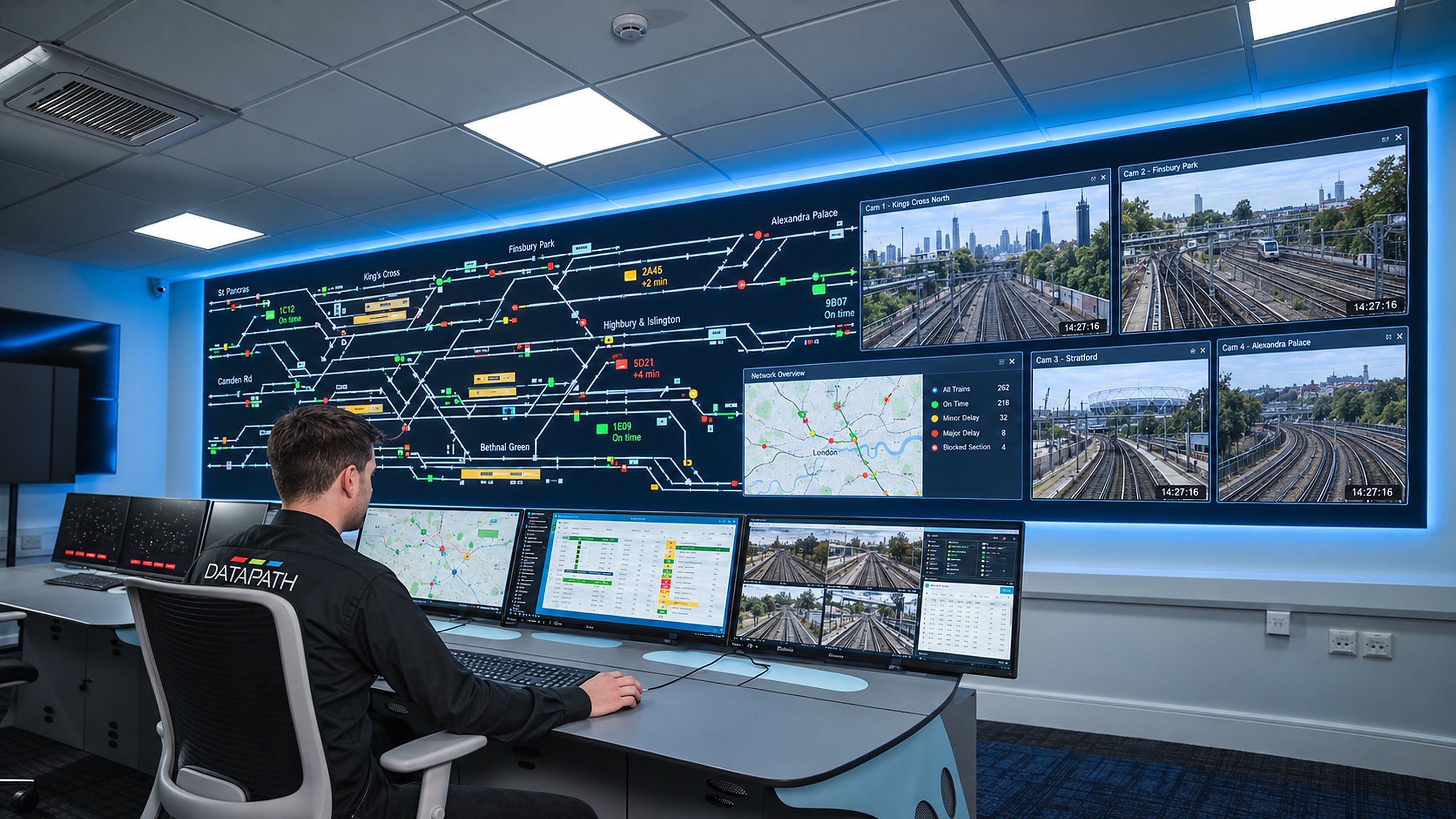
Where screens need to display content to a schedule, we connect them to a Digital Signage system. In operator rooms running around the clock we use video wall controllers designed for control rooms.
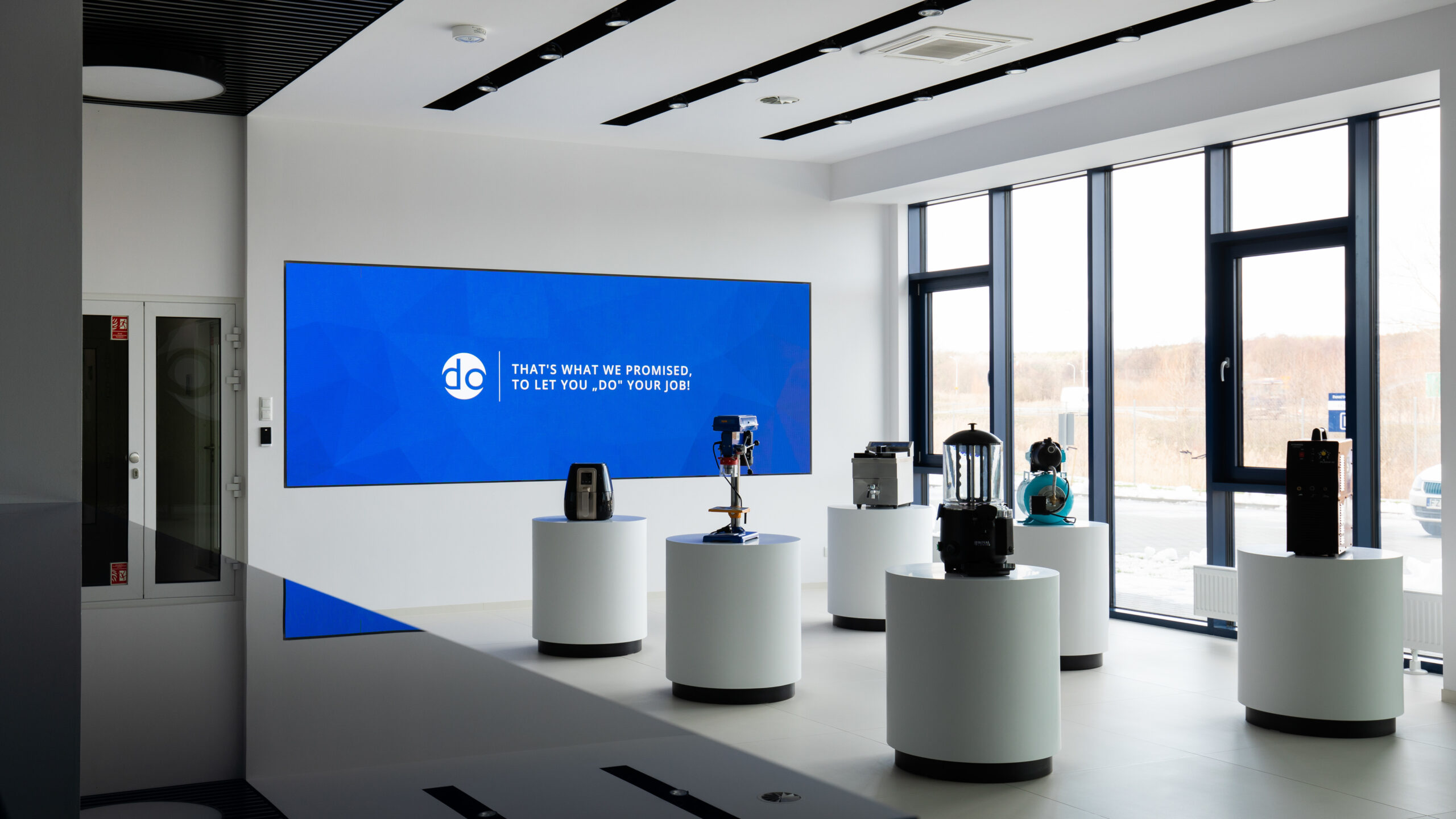
Retail and services. Advertising screens, menu boards and display mosaics – such as the menu board in a Rolls United restaurant.
Industry, Energy and Transport. Video walls in dispatch centres and monitoring centres, running around the clock with multiple image sources.
Business / Corporate. LED screens in lobbies and boardrooms, and video walls in offices – as at the Nomad Electric headquarters.
An LED screen is an investment for years to come, so we plan service together with the design:
We have built LCD video walls for clients including Urząd Marszałkowski Województwa Małopolskiego, Krajowa Szkoła Skarbowości and Nomad Electric.
Click a question to see the answer.
In practice it is the same technology. An ‘LED display’ is a single module or a small screen, an ‘LED screen’ is an image assembled from modules for a room or lobby, and an ‘LED wall’ is a large-area screen, usually covering an entire wall. Image quality is determined by pixel pitch, brightness and the processor – not by the name.
Yes, provided the screen has a high refresh rate and its brightness is set for the room. With low-refresh screens the camera picks up flicker and banding.
Yes. For built-in installations we choose front-serviceable screens, so a module can be replaced without dismantling the wall. That is how we installed the screens in the Siemens conference room and the Expondo lobby.
Up to a width of around 2 m, a single display or an LCD wall usually wins – they cost less. For larger screens, in bright rooms and wherever seams would get in the way of the image, LED has the advantage.
No. An initial quotation and a consultation with a PROAV engineer are free of charge. The only thing that is paid for is a detailed construction design, if the client orders it separately.
PROAV guide
LED screens – how to choose?
Which pixel pitch for a conference room, what screen size, Full HD or 4K, LED or LCD, and how much an LED screen costs – we have covered every selection parameter in a single guide, with tables and examples.
From what distance will the screen be viewed? The viewing distance determines the pixel pitch – and therefore the cost of the screen.
What content will be displayed? Presentations, data, video or advertising each call for a different resolution, aspect ratio and control method.
Where and how will the screen be mounted? We check the load-bearing capacity of the wall, the requirements of the enclosure and service access from the front or rear.
How many hours a day will the screen run? Round-the-clock operation affects the choice of screens, power supply and cooling.
Planning an LED screen or a video wall?
We install screens for businesses, public authorities and commercial spaces. We start every project with a site survey and an analysis of the content the screen will display.