Flexible visualisation: new Dexon controller capabilities for control rooms

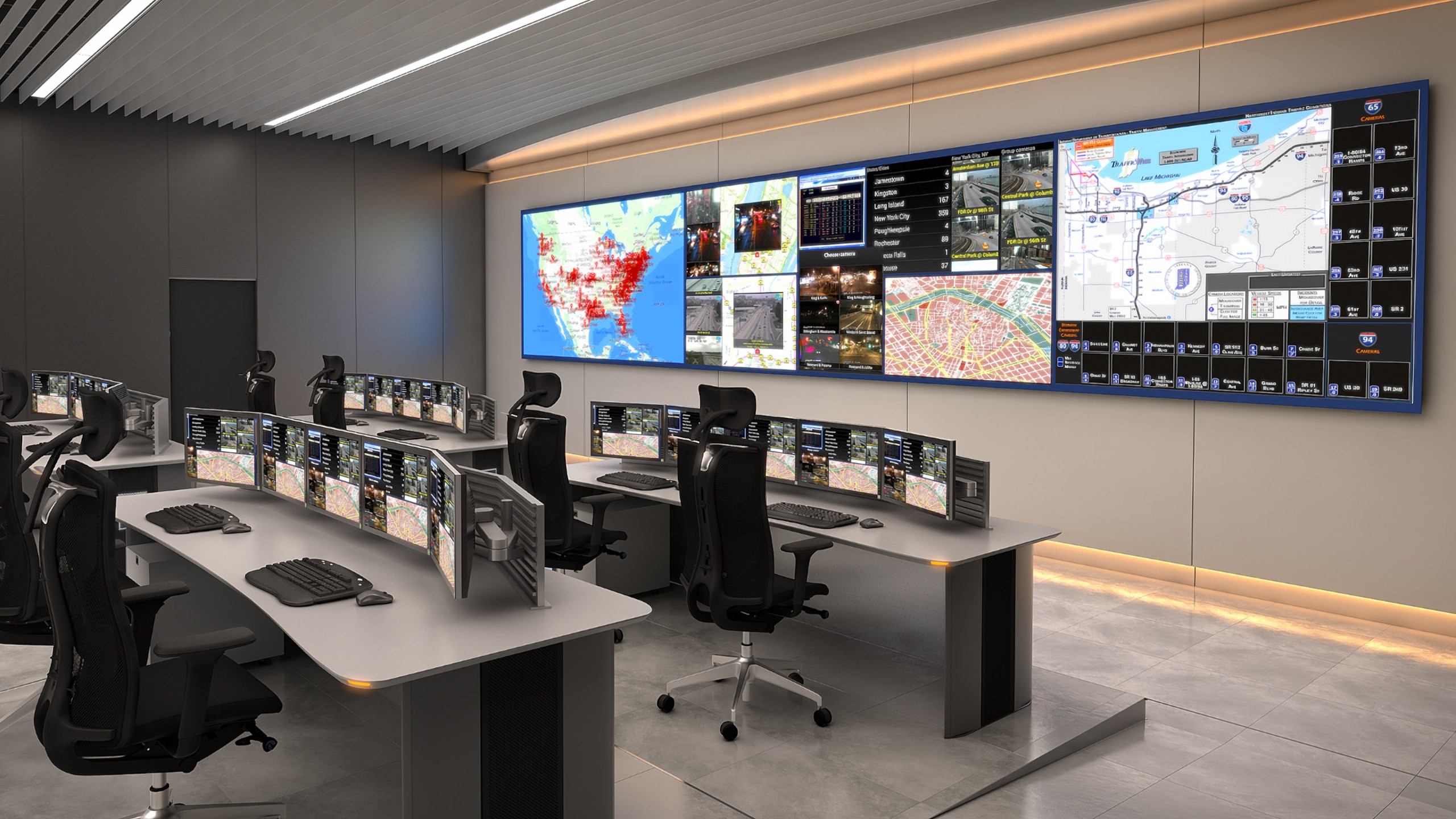

In dispatch centres, crisis management centres and business control rooms, the quality and availability of visual information translate directly into the speed and accuracy of decisions. In the video walls we design and service at PROAV – from dispatch centres for photovoltaic farms to boardrooms in public offices – the controller determines how many sources reach the screens and in what way. Dexon Systems controllers, which are part of our offer, have gained three new input cards: SDVoE, USB-C and DisplayPort. With them we can integrate sources from anywhere in the building, enable smooth content sharing from mobile devices and simplify the system architecture.
A design based on analysis of operational processes. Before we select a controller, we agree with the team which systems the operator needs to monitor, where the signal sources are located and how the room works in emergencies. On this basis we plan the wall layout, the number of inputs and spare capacity for expansion.
The wall as part of a complete system.We design the controller, displays, cabling and AV network together with room control, the sound system and video conferencing, and agree network requirements with the client's IT department.
Service for systems running around the clock. Once the video wall is commissioned, the client has our service department at their disposal, and we specify a controller with redundant power supplies wherever an interruption in display is unacceptable.
Solutions used:
Brands:
Industries:

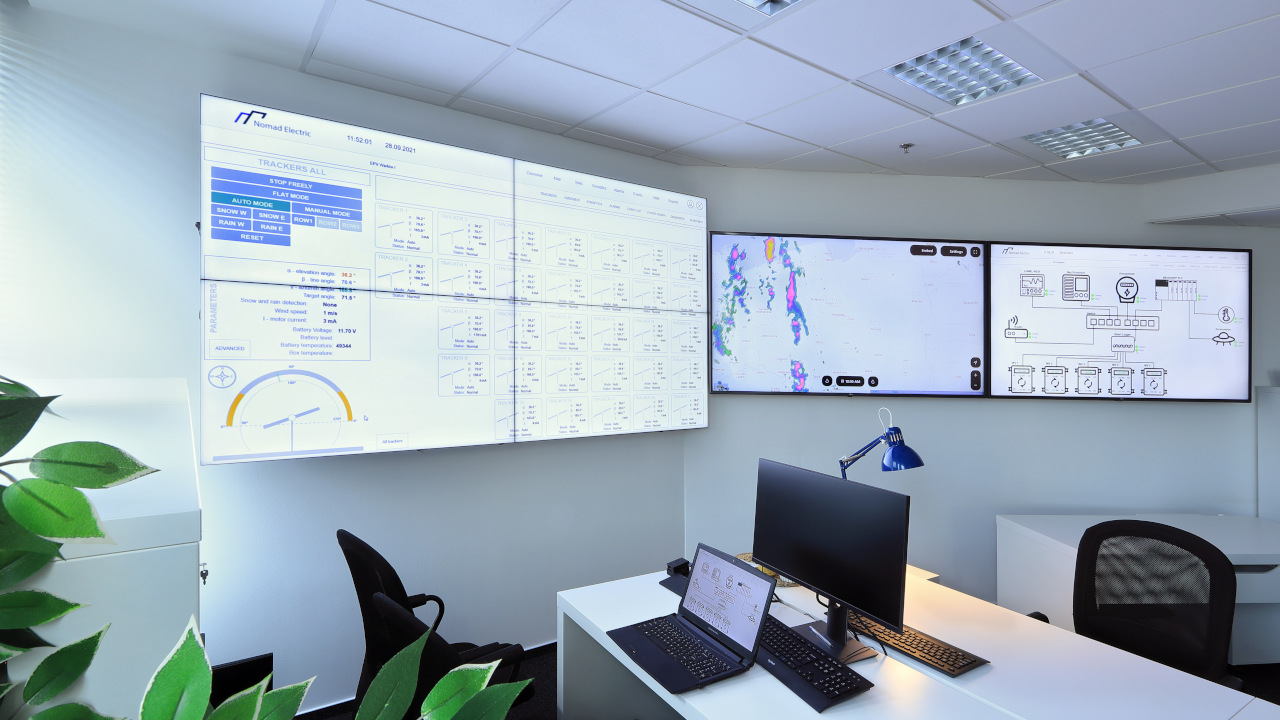
We have deployed video walls in facilities with very different working patterns – from an operations centre to a boardroom. Each of these projects shows different requirements for the controller and the way content is managed.
Nomad Electric. For a company managing more than 170 photovoltaic farms, we deployed video walls presenting operational indicators from many sources – workstations, websites and remote sources. A designated employee changes the data layout on the screens independently, and we prepared the system for expansion with further displays.
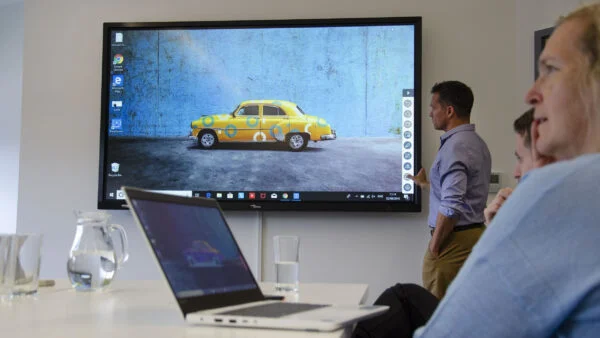
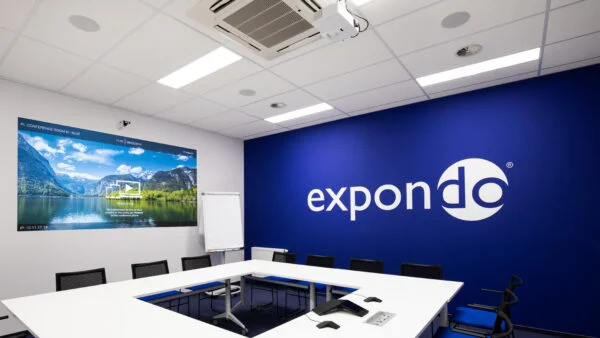
Marshal's Office of the Małopolska Region. In the boardroom, we commissioned a video wall for presentations and performance indicators, integrated with the video conferencing system and sound system.
Integrating sources distributed across the whole facility. In a classic architecture, every signal source, such as a workstation, server or CCTV recorder, requires dedicated cabling run to the rack housing the controller. The new SDVoE card enables uncompressed 4K video transmission over 10G network infrastructure with no noticeable latency. The server room and operator positions can be in different parts of the building, and adding further sources is done by extending the network, without replacing the central device.
Smooth content sharing from mobile devices. The USB-C card allows 4K images to be displayed directly from laptops, tablets and smartphones. During briefings, crisis team meetings or board meetings, a presentation starts without adapters or time-consuming connection setup. Bear in mind, however, that 15 W of power per input can keep a tablet charged but will not replace a laptop charger during a full day's work.
Direct integration of operator workstations. The DisplayPort card lets you connect workstations for dispatch, SCADA and CCTV systems directly to the controller, in 4K quality on all four channels simultaneously. Removing converters from the signal path reduces the number of potential points of failure, which is crucial for systems operating 24/7.
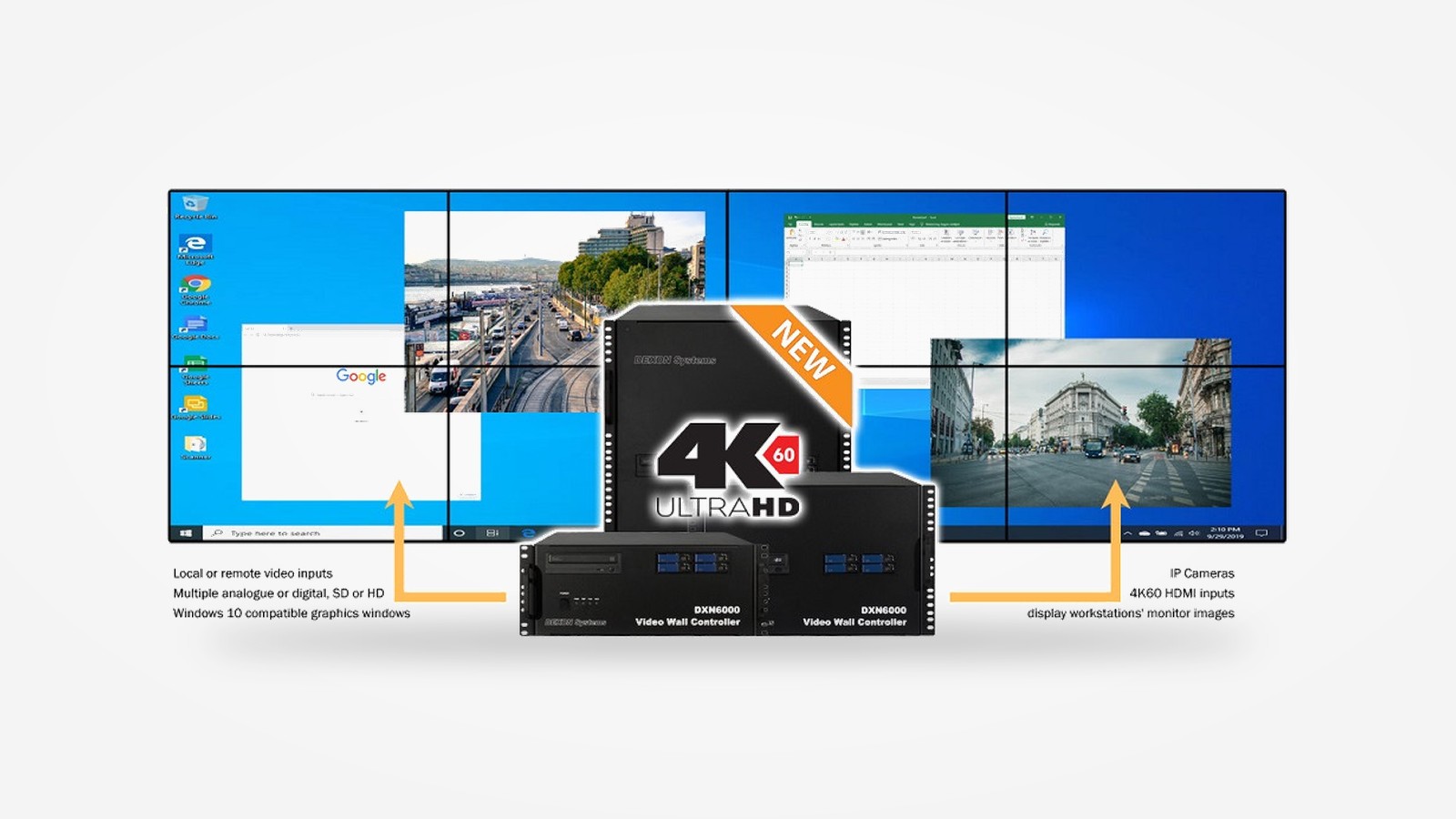

Uniformed services. Command posts and emergency call centres operate around the clock and require the highest system availability. DXN6000 controllers are available in versions with redundant power supplies, and the USB-C input allows the image from the computer of a liaison officer or a representative of a partner service to be shown on the wall immediately.
Industry, Energy and Transport. Dispatch centres of power grid operators, production plants and logistics centres aggregate images from many systems located across the site. Network transmission makes it easier to add further workstations as the plant grows, and DisplayPort inputs accept signals from SCADA stations without additional intermediate devices.
Public administration. Crisis management centres in voivodeship, regional and municipal offices are often activated only in emergencies, and representatives of many institutions using their own computers take part in the work of the crisis team. Easy device connection via USB-C and the possibility of phased expansion without replacing the entire system also make it easier to spread the investment over successive budget periods.
Business / Corporate. Network and security operations centres (NOC, SOC), business dispatch centres and boardrooms equipped with several screens require clear presentation of data from many sources at once. Smaller deployments can be handled by the compact DVP1262 processor, and larger ones by a suitably selected controller from the DXN6000 family.
Crisis team rooms, smaller dispatch centres and conference rooms with a wall of several screens. For this range we recommend the DVP1262 processor, which handles up to twelve sources, two independent screens or screen sets, and up to six windows on each. According to the manufacturer, the new USB-C inputs on this model supply up to 60 W to connected devices, so the presenter's laptop can charge during the meeting.
Command centres, 24-hour dispatch centres and large video walls. We propose the DXN6000 family, which we size according to the number of images the operator needs to monitor simultaneously – from 2 to 64 windows on the wall. All models deliver full 4K quality, run on Windows, which makes them easier for the IT department to maintain, and are available in versions with redundant power supplies designed for continuous operation.
We write more about designing video walls in our article on how they are built and used, and we describe command centres in our piece on control room solutions.

Are the signal sources centralised or distributed? If all the sources are in a single rack, we recommend classic cabling – it remains cheaper and simpler to service. If they are located in different parts of the facility, or the system is to be expanded in stages, network transmission pays for itself with the first expansion.
At what stage do we involve the IT department? From the very beginning. Transmitting video over the network requires suitable 10G switches and, as a rule, a dedicated network for the AV system. We include them in the schedule and budget from the first concept.
Who will manage the content layout on the wall? We establish whether window layouts are switched by the operator or by a designated administrator, and prepare ready-made scenarios for typical situations – as in the Nomad Electric project, where a single employee changes the data layout independently.
What is the planned mode of operation? A dispatch centre operating around the clock requires redundant power supplies and a planned service path. A crisis team room used a few times a month does not need such safeguards, and the savings can be put towards expanding the wall itself.
Planning a video wall or a monitoring centre?
We design visualisation systems for control rooms and dispatch centres – every project starts with an analysis of operational processes and operator requirements, and once the system is commissioned we provide support from our service department.